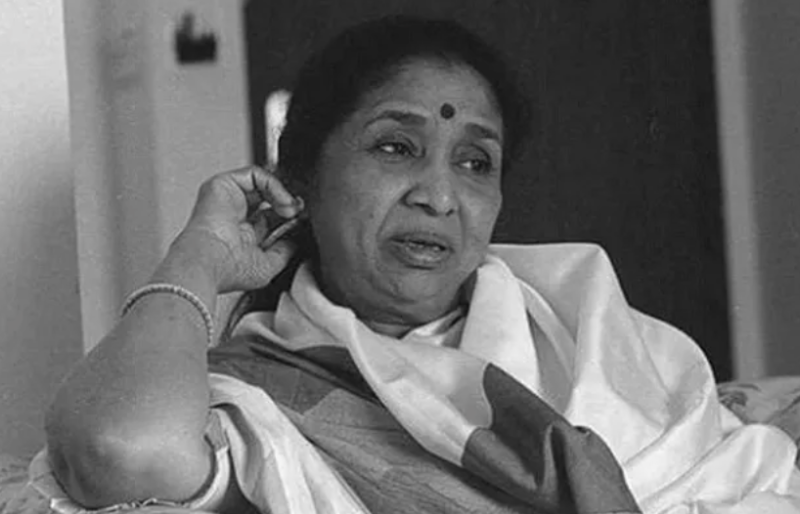
Legendary playback singer Asha Bhosle, whose voice powered more than 12,000 songs across 20+ languages and generations of Indian cinema, passed away in Mumbai on Sunday at the age of 92. Her death marks the end of one of the most extraordinary careers in film music history, spanning from the black-and-white era to the streaming age.
For over eight decades, Asha Bhosle remained the soundtrack of Bollywood’s changing moods — romance, rebellion, glamour, heartbreak, cabaret, ghazal, pop and dance. From Madhubala and Helen to Rekha, Urmila Matondkar and beyond, hers was the rare voice that adapted effortlessly to every heroine, every era and every soundscape.
15 film songs that define Asha Bhosle’s legacy
- Piya Tu Ab To Aaja
- Dum Maro Dum
- Chura Liya Hai Tumne
- Aaja Aaja Main Hoon Pyar Tera
- O Haseena Zulfonwali
- Yeh Mera Dil
- Dil Cheez Kya Hai
- Mera Kuch Saamaan
- Rangeela Re
- Tanha Tanha
- Radha Kaise Na Jale
- Kambakht Ishq
- Lucky Lips
- Ek Main Aur Ek Tu
- Abhi Na Jao Chhod Kar
Her film-song legacy includes some of the most immortal tracks ever recorded in Hindi cinema: “Piya Tu Ab To Aaja,” “Dum Maro Dum,” “Chura Liya Hai Tumne,” “Aaja Aaja Main Hoon Pyar Tera,” “O Haseena Zulfonwali,” “Yeh Mera Dil,” “Dil Cheez Kya Hai,” “Mera Kuch Saamaan,” “Rangeela Re,” and “Radha Kaise Na Jale.” These weren’t just hit songs — they became defining moments in Bollywood storytelling.
Asha Bhosle’s collaborations with composers became milestones in film history. With O. P. Nayyar, she built the energetic, rhythm-led female playback sound of the 1950s. With R. D. Burman, whom she later married, she reinvented Bollywood music through western arrangements, jazz textures, cabaret, disco and experimental melodies in films like Teesri Manzil, Caravan, Don, Yaadon Ki Baaraat and Ijaazat. Her later collaborations with A. R. Rahman proved that even in the 1990s and 2000s, her voice could still dominate modern cinema.
What made her cinematic contribution singular was her ability to change character through voice. She could be the smoky seduction behind Helen’s dance numbers, the emotional soul of Rekha’s Umrao Jaan, the youthful energy of Rangeela, or the haunting maturity of Ijaazat. Few playback singers ever possessed such dramatic elasticity while retaining an unmistakable vocal identity.
Beyond playback, Bhosle also made a memorable on-screen acting turn in the 2013 film Mai, where she played a mother battling Alzheimer’s. Her performance received critical acclaim and demonstrated that her relationship with cinema extended beyond songs into performance itself.
From the golden age of Mohammed Rafi–Kishore Kumar duets to the modern sound of A.R. Rahman, Asha Bhosle never stopped evolving. Her songs defined film characters, elevated scenes, and often outlived the films themselves.
Indian cinema may have lost its most versatile playback icon, but her voice will continue to live in every dance floor classic, every rain-soaked love song, every ghazal-filled silence, and every nostalgic Bollywood memory.