Bhopal/Jabalpur, April 8, 2026
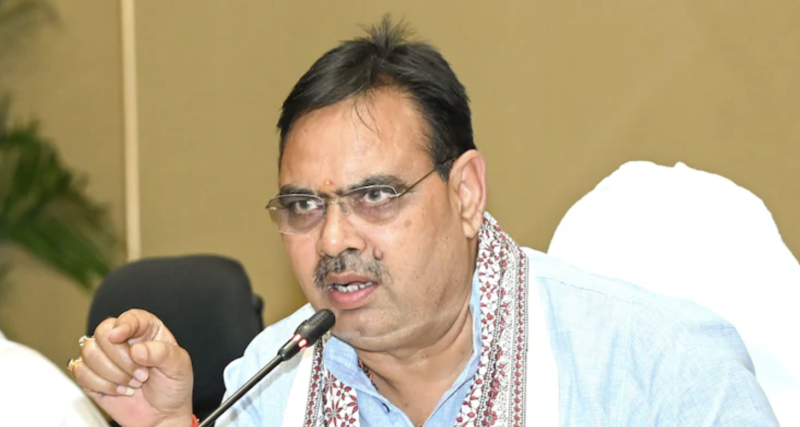
Madhya Pradesh is rapidly emerging as a leading state in agricultural development by combining farming traditions with scientific innovation and market-led growth, Chief Minister Mohan Yadav said on Wednesday while addressing the Krishi Manthan Workshop at Jawaharlal Nehru Agricultural University, Jabalpur.
The Chief Minister said agriculture is not merely a source of livelihood but the foundational pillar of India’s culture, civilisation and way of life, adding that the state government is moving with commitment to make farming increasingly profitable.
Speaking under the year-long “Samruddh Kisan–Samruddh Madhya Pradesh” campaign, Dr Yadav said the state is empowering farmers through modern technology, scientific cultivation practices and stronger market linkages, rather than limiting support to basic infrastructure alone.
He described the Krishi Manthan Workshop as a powerful effort to weave together farmers’ lived experience, scientific research, government policy and market opportunities into a single ecosystem.
Tradition meets technology
Highlighting India’s deep agricultural heritage, the Chief Minister said farming traditions in the region date back thousands of years, with ancient rock paintings at Bhimbetka Rock Shelters reflecting evidence of early agrarian life.
He said Indian civilisation has always viewed agriculture with reverence, and that the country has moved from a past of grain shortages to an era of rising output driven by new seed varieties and agricultural science.
Invoking former Prime Minister Atal Bihari Vajpayee’s “Jai Kisan, Jai Jawan, Jai Vigyan” vision, Dr Yadav said the present era now demands the addition of “Jai Anusandhan” (research) to further accelerate farm transformation.
Focus on natural farming and startups
The Chief Minister said Madhya Pradesh has emerged as the state with the highest natural farming footprint in the country, reinforcing its leadership in sustainable agriculture.
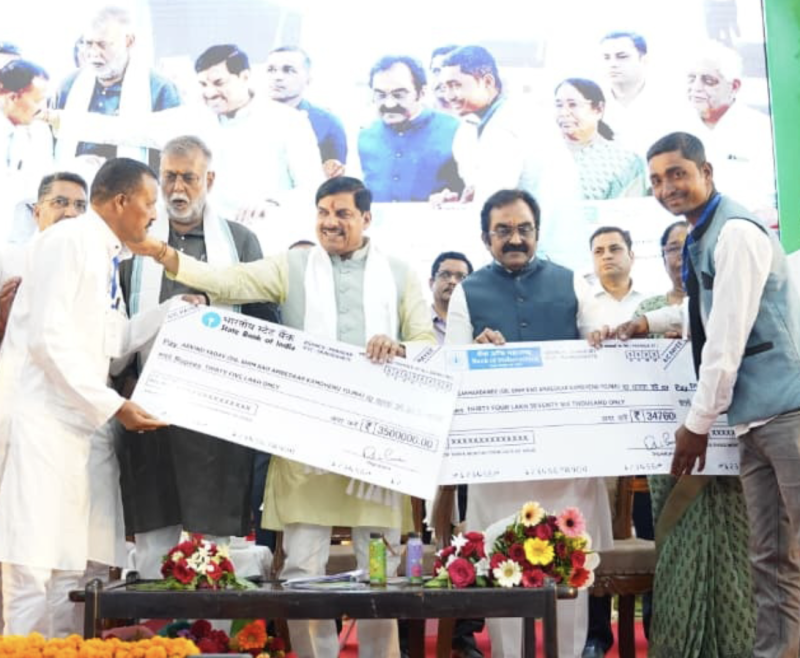
During the event, he also distributed certificates to 10 startup entrepreneurs, signalling the state’s push to integrate innovation and agri-enterprise into the rural economy.
In addition, projects worth more than ₹23 crore were inaugurated or dedicated, adding infrastructure support to the broader agricultural ecosystem.