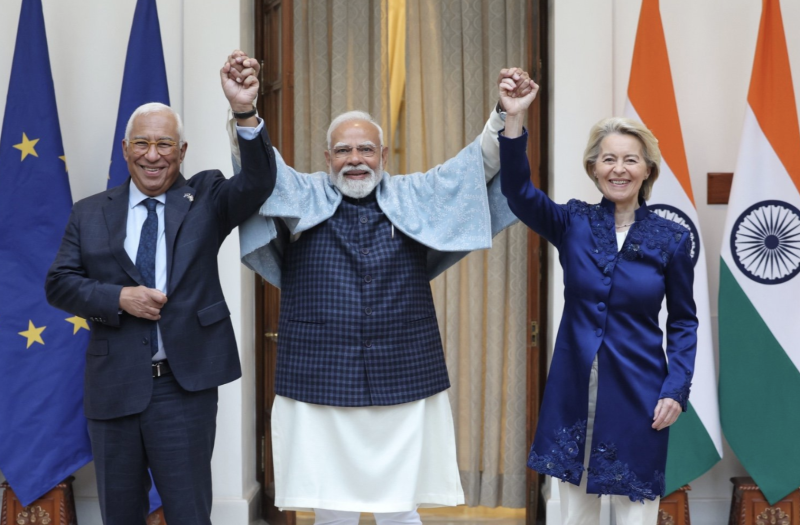
Mr. R. Dinesh, Chairman, TVS Supply Chain Solutions, on the proposed India–EU Trade Agreement.
Quote:
"The India–EU Free Trade Agreement is a momentous and strategic step as global supply chains undergo a fundamental reset. The Hon'ble Prime Minister's call for India and Europe to act as a 'double engine of growth' aptly captures the opportunity ahead. For companies like ours, with a significant presence across the EU, the agreement enhances the opportunities while enabling deeper integration of Indian companies into European value chains. This will pave the way for alignment on standards and using digital trade will help in accelerating cross-border trade, manufacturing, and supply chain collaboration."
"The India–EU trade agreement is not just another pact, it is a real inflection point. The EU is already India's largest goods trading partner, with bilateral trade above $136 billion and Indian exports touching around $76 billion. When a relationship of that scale becomes easier through tariff reductions across most traded goods, it changes the confidence with which industries plan for the long term.
As geopolitical fragmentation reshapes trade, India's access to the EU's 27-nation bloc, representing 25% of global GDP, positions us as the credible alternative to Chinese restrictions and US tariff barriers. Our MSMEs in textiles, leather, marine, and increasingly nutraceuticals; now integrate into European supply chains instead of competing at the margins. Overall, this deal strengthens India's role in the global value chain."
-Mr. Sanjaya Mariwala, Executive Chairman and Managing Director of OmniActive Health Technologies Ltd.
Sammir Dattani, Executive Director, Sanathan Textiles mentions - "The progress on the India - EU Free Trade Agreement will benefit the Indian textile and apparel sector, as tariffs on textile and apparel products will reduce from 12% to 0%, thereby enhancing cost competitiveness and market access in the European Union. This development creates opportunities for us to expand and explore demand across various European countries.
Europe is home to some of the world's leading fashion brands and automotive manufacturers, both of which rely extensively on imported textiles for apparel, upholstery, technical fabrics, and automotive interior applications. Enhanced access to this market provides Indian manufacturers like Sanathan Textiles an opportunity to participate more deeply across fashion-led consumption as well as value-added technical and automotive textile segments."
Sachin Alug, CEO, NLB Services
"The India–EU Free Trade Agreement marks a clear shift toward a more strategic and enduring economic partnership. For Europe, India offers scale, diversified capabilities, and services that support innovation, resilience, and competitiveness. For Indian enterprises, the agreement provides structured access to one of the world's most regulated and quality-driven markets, encouraging higher standards and value-led growth.
As European organizations deepen delivery footprints in India, the focus is steadily moving beyond offshore hiring toward building resilient Global Capability Centers with stronger governance, compliance, and operating rigor. This evolution is expected to drive sustained demand for specialised capabilities across compliance and trade, ESG and sustainability reporting, data protection and regulatory programmes, digital and engineering delivery, GCC build-outs, and workforce and vendor governance.
The phased reduction of motor vehicle tariffs- from 110% to 40%, with a longer-term aim of 10% within defined quotas- has the potential to reshape automotive supply chains. It lowers entry barriers while incentivising alignment with global quality, safety, and sustainability standards rather than volume-led exports.
Equally important is the focus on people mobility, including simplified student access supported by a dedicated EU office in India. Over time, this will strengthen education-to-employment pathways and the broader talent ecosystem across both regions. The India-EU startup partnership adds further momentum by connecting capital, research, and enterprise demand. Ultimately, the real impact of the agreement will depend on the speed of execution and how effectively policy intent translates into outcomes on the ground."