

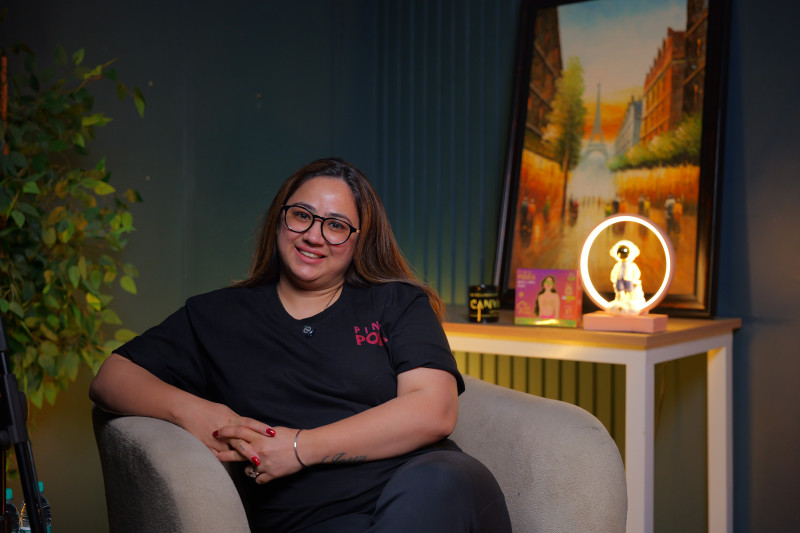
In conversation with Editor Ankur Sharma, The News Strike, Manveen Ssharma, CEO of Pinq Polka, said sustainable growth in intimate-care categories is driven less by marketing and more by product experience, customer trust, and continuous feedback-led innovation. She emphasized that while visibility may drive first-time purchases, repeat purchases depend on comfort, quality, reliability, and a brand’s ability to address often-overlooked concerns around fit, skin sensitivity, and confidence. Ssharma also described Pinq Polka as both a product company and a behavior-change brand, building awareness and adoption in emerging women’s care categories through customer-led product development rather than aggressive marketing spend.
1. In a category driven by both necessity and stigma, how do you build trust capital that translates into repeat purchase, not just trial?
In intimate and personal-care categories, trust is built through product experience, not just marketing. While a trial may come from visibility, a repeat purchase only happens when customers genuinely feel comfort, quality, and reliability. Marketing and packaging can do the first sale however, product experience sustains the overall experience and repeatability. From the beginning, we focused heavily on customer feedback, product testing, and solving real concerns around comfort, sizing, and skin sensitivity. We also stayed closely connected with consumers, continuously improving products based on their feedback. In categories driven by both necessity and stigma, customers return to brands that make them feel understood, comfortable, and confident in their choices.
2. Are you fundamentally a product company or a behavior-change brand—and how does that shape your growth strategy?
We are fundamentally both a product company and a behavior-change brand. From sanitary pads to breast cups, nipple covers, and shapewear, our focus has been to understand the “need and want” of women and create categories that were still a niche in India. Many of our products were established abroad, but Indian consumers were still exploring them. That is why our growth strategy is not based on a burning model or excessive marketing. We grow by listening to our customers' feedback, improving quality, understanding their needs, and building trust. Even today, customer feedback shapes our decisions. That direct bond with customers and the trust they place in us is what helps us grow and build stronger categories under our umbrella.
3. How do you defend against commoditization as larger FMCG players enter with distribution advantages?
We do not see larger FMCG players as a competition because when new players enter a category, it means that the category has strength and long-term potential. If you look at soaps, shampoos, conditioners, or even clothing, multiple brands exist because consumers have different needs, preferences, and spending capacities. Even after many brands entered the space, we continued to stay ahead because customers trust our quality and product experience. We spend a lot of time understanding sizing, comfort, feedback, and actual consumer needs before launching anything. We also maintain a very direct relationship with customers, which helps us improve faster. For us, it is not about being the cheapest or loudest brand but about being the best product-led brand.
4. What data signals do you track to understand evolving consumer comfort with intimate categories?
At PINQ POLKA, we look at consumer comfort through both behaviour and conversation. Earlier, customers interacted with intimate categories very transactionally. Today, they’re asking more confident, specific, and education-led questions, which are themselves a strong signal of category evolution.
We closely track search behaviour around products like nipple covers, stick-on bras, boob tape, and "shapewear solutions" because it helps us understand not just demand but intent. For example, there’s been a visible shift from "What is this product?” to "Which one works best for my outfit/body type/use case?” That indicates growing familiarity and comfort.
We also study customer reviews, DMs, creator conversations, repeat purchase behaviour, and the kind of content consumers save or share. When women openly discuss issues like bra visibility, outfit anxiety, body smoothing, or comfort hacks in comments and communities, it tells us the category is becoming less taboo and more solution-oriented.
Another important signal is how occasion-based the purchase journey has become for everyday wear. Consumers are no longer buying these products only for weddings or special events; they're integrating them into everyday dressing, workwear, travel, and fashion experimentation. That shift from “emergency product” to “wardrobe essential” is a huge indicator of changing comfort levels.
For us, the biggest signal is when consumers stop whispering about the category and start participating in the conversation confidently, and we’re definitely seeing that shift happen.
5. How do you balance premium positioning with accessibility in a price-sensitive market like India?
In a price-sensitive market like India, the focus for us has never been on being the cheapest product. It has always been about delivering the best quality to the customers and solving a real problem for women. From the beginning, we understood that there is a growing segment of consumers who are willing to spend extra money for comfort, quality, and a better experience. At the same time, we worked on removing unnecessary frills from packaging and operations without compromising on product quality and better experience. This helped us to make premium products more affordable and accessible.
6. Is your moat product innovation, brand narrative, or community—and which one compounds over time?
For us, the moat is a combination of product innovation, brand narrative, and community, but if I had to choose what compounds the most over time, it’s trust-led community built through consistent problem solving and innovative products.
At PINQ POLKA, we operate in a category where women have traditionally felt hesitant, under-informed, or even awkward while shopping. So the real opportunity isn’t just selling a product; it's normalizing conversations around modern dressing solutions and body confidence.
Product innovation is what gets consumers to try the brand. We spend a lot of time understanding real wardrobe problems, whether it’s outfit compatibility, comfort, invisibility under clothes, or climate-specific needs for Indian consumers. In intimate wear, even small product improvements create huge consumer loyalty because these are deeply experience-driven purchases.
Brand narrative is what makes the category feel approachable. We’ve consciously built a voice that feels conversational, non-intimidating, and modern instead of overly clinical or overly sensual. That balance matters because today’s consumers want practicality without shame attached to the category.
Community is what compounds over time. When customers share styling hacks, recommend products, engage with creators, or openly discuss outfit concerns and solutions, the brand becomes bigger than the product itself. In categories like ours, word-of-mouth and relatability are especially powerful because trust transfers peer-to-peer far faster than through traditional advertising. While innovation drives trial and narrative builds recall, community ultimately creates defensibility and long-term brand equity.
7. Do you see global expansion as a natural extension, or is cultural nuance too strong in this category?
Yes, there are definitely strong cultural nuances in this category, especially because intimate wear, personal care, and comfort products are deeply connected to women’s lifestyles, confidence, and everyday habits. But at the same time, we have also seen that many of these categories are already well established in markets like the US and UK. In fact, that gave us confidence while building the brand in India because we understood there was already proven demand globally. Our approach is not to scale blindly but to first understand customer behavior, sizing, comfort preferences, and product needs market by market. If the product solves a genuine need, geography eventually becomes a natural extension.
.jpg)
