Vice President Calls for a National Innovation Movement
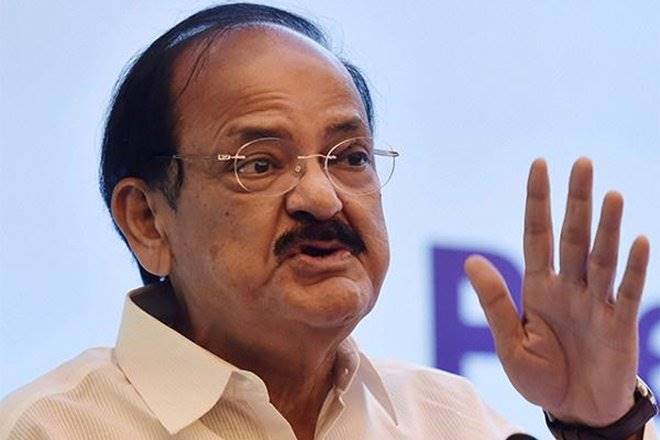
The Vice President of India, M. Venkaiah Naidu, emphasized the need for countries to collaborate and form international alliances for the protection and sharing of data in the digital era.
Highlighting the growing importance of cybersecurity and data protection, the Vice President said, “There is an urgent need to develop a multilateral data-sharing framework based on the principles of adequacy and reciprocity.”
The Vice President was speaking after releasing the book New-Age Technology and Industrial Revolution 4.0, authored by Narendra Jadhav, at Upa Rashtrapati Bhawan in New Delhi.
Speaking on the importance of technology-driven growth, Shri Naidu stressed that the benefits of technological advancements must be made inclusive across nations by bridging the digital divide. He underlined the need to leverage advanced technologies to address challenges in sectors such as infrastructure, energy, water, waste management, transportation, real estate, and urban planning.
He further observed that emerging technologies could support ongoing global efforts to mitigate the impact of climate change and global warming.
The Vice President also cautioned against the spread of unverified information and fake news, stressing the importance of responsible communication in the digital age. He highlighted the need for re-skilling professionals in view of increasing concerns regarding job displacement arising from the adoption of new-age technologies.
The event was attended by Shri K.P.R. Nair, Chairman of Konark Publishers, Smt. Vasundhara Jadhav, and several other distinguished guests.
Highlights from the Vice President’s Address
Congratulating the author, Shri Naidu described the book as highly relevant in the context of the rapidly evolving technological landscape shaped by the Fourth Industrial Revolution.
He noted that while emerging technologies offer immense opportunities for productivity enhancement, wealth creation, and accelerated economic growth, they also raise complex societal, economic, and security-related concerns.
The book examines multiple dimensions of Industrial Revolution 4.0, including:
Emerging technologies and their impact on society
Opportunities and challenges posed by AI, Big Data, and automation
Public policy implications in a global context
Concerns related to economy, democracy, national security, and global peace
The Vice President observed that technological advancements, if combined with appropriate public policy measures, could significantly reduce poverty and improve quality of life.
He also highlighted the transformative potential of new technologies in sectors such as agriculture, industry, services, finance, education, and healthcare.
AI, Automation, and Employment
Referring to the growing adoption of Artificial Intelligence and Machine Learning across industries ranging from manufacturing to space exploration, Shri Naidu acknowledged both the opportunities and limitations of AI.
He observed that while automation may reduce certain forms of physical employment, it could simultaneously create new opportunities requiring intellectual and technological skills.
“The silver lining is that when physical jobs are lost due to automation, jobs for the mind open up,” he remarked.
Cybersecurity and Data Protection
Emphasizing the strategic importance of data, the Vice President said that as societies increasingly shift towards digital and online platforms, data will become central to all human activities.
He stressed the importance of global cooperation in cybersecurity and warned that digital networks could be exploited for unlawful activities, including threats to national security.
According to Shri Naidu, cyberattacks have the potential to disrupt critical infrastructure, including communication systems and aviation networks, making international cooperation essential.
He reiterated the need for a multilateral framework for data sharing and privacy protection while balancing national sovereignty with global collaboration.
Conclusion
The Vice President congratulated Narendra Jadhav and his team for publishing a timely and relevant book on one of the most pressing global issues of the modern era.
He expressed confidence that the book would prove valuable not only for technology professionals but also for policymakers and decision-makers.