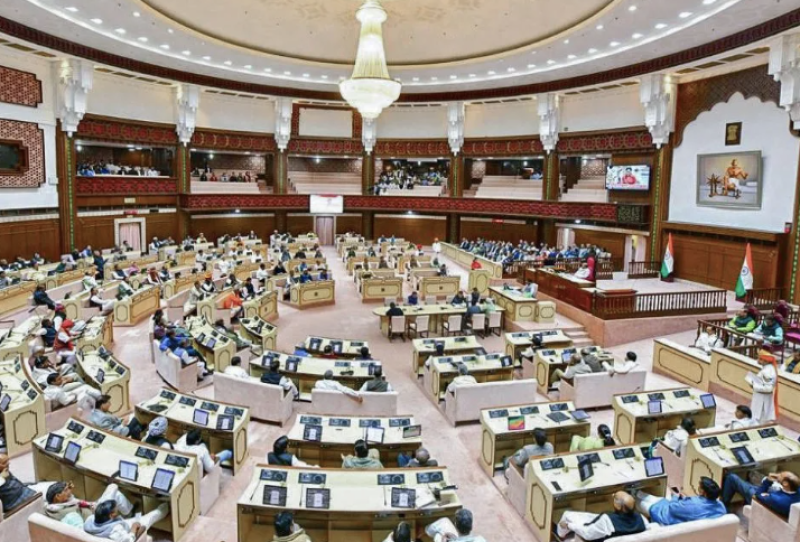
The Rajasthan Legislative Assembly on Thursday passed the Rajasthan Jan Vishwas (Amendment of Provisions) Bill, 2026 by voice vote, aiming to promote trust-based governance and reduce criminal penalties for minor regulatory violations.
After receiving assent from the Governor of Rajasthan and publication in the official gazette, the new legislation will replace the Rajasthan Jan Vishwas (Amendment of Provisions) Ordinance, 2025.
Replying to the debate in the Assembly, Parliamentary Affairs Minister Jogaram Patel said the bill does not curtail the powers of the judiciary or the executive but seeks to bring administrative reforms while strengthening public trust in governance.
According to the minister, the move aligns with the government’s focus on ease of living and ease of doing business. He noted that several older laws imposed criminal penalties, including imprisonment, even for minor violations or technical lapses. This often led to unnecessary litigation and added pressure on the judicial system.
The amendment replaces such imprisonment provisions with monetary penalties, which the government believes will reduce legal complications for citizens, businesses and institutions while maintaining accountability.
Patel said the legislation is aimed at establishing a trust-based governance model in Rajasthan, encouraging investment and entrepreneurship while simplifying administrative procedures. He also clarified that the bill does not dilute provisions related to serious offences and that repeat offenders will still face strict penalties.
Changes in Several State Laws
Through the amendment bill, provisions in multiple state laws have been revised, including the Rajasthan Forest Act 1953, Rajasthan Warehouse Act 1958, Rajasthan Moneylenders Act 1963, Rajasthan Non-Government Educational Institutions Act 1989, Rajasthan Stamp Act 1998, and Rajasthan Municipalities Act 2009, among others.
Higher Penalties for Certain Violations
One key change relates to the Rajasthan Warehouse Act 1958. Earlier, storing goods without a license could attract up to one year of imprisonment or a fine of ₹1,000. Under the new amendment, the imprisonment provision has been removed and replaced with a penalty of up to ₹50,000.
Similarly, misuse of domestic drinking water connections for non-domestic purposes will now attract a daily fine ranging from ₹200 to ₹1,000, instead of the earlier provision of imprisonment.
The minister also announced that the state government is working on a separate law for the protection of the Khejri tree, a culturally and ecologically significant species in Rajasthan. Legal experts are currently studying the proposal, and the government plans to introduce strict punishment provisions in line with environmental concerns.