Mr. Harry bajaj, Founder and CEO, Mobec Innovation.
Quote - Our key expectations from the upcoming Union Budget; we seek some more forward looking incentives (production linked incentives) for the battery recycling industry as the first lot e-vehicles (spl commercial) are going to hit their end-of-life cycle soon, and all their batteries would need to be recycled/repurposed in a sustainable matter, else they will just reach in landfills, increasing carbon footprints. This needs to be extended to lithium, cobalt and nickel and rare earth minerals as well. Similar benefits for the battery energy storage systems (BESS) as it is these industries will help in pushing our nation's net zero goals under the vision of our Honourable Prime Minister.
Ms. Radhika Kalia, Managing Director, RLG Systems India Private Limited
"India's waste challenge has reached a scale where incremental policy responses are unlikely to produce results. The current scenario warrants structural policy interventions. E-waste volumes have grown by 73% between 2019 and 2023, yet formal recycling captures barely one-third of the total e-waste produced. These figures highlight significant environmental risk, lost material value, and long-term public-health costs. I expect the Union Budget 2026 to treat waste management as core economic infrastructure. However, regulation alone is insufficient to expand waste management and recycling systems to the size, speed, and capacity that India now requires. Recycling parks, battery recovery facilities, and advanced dismantling infrastructure are capital-intensive systems with long gestation cycles. The budget could announce a dedicated circular economy fund supported by concessional lending through NABARD and SIDBI, blended finance, and research grants to unlock and inspire investment. I hope the budget aligns financial instruments with environmental outcomes to enable competitive formal systems and enhance commercial viability."
Mr Vivek Gupta, MD of Oswal Pumps, for his expectations from the upcoming Budget 2026:
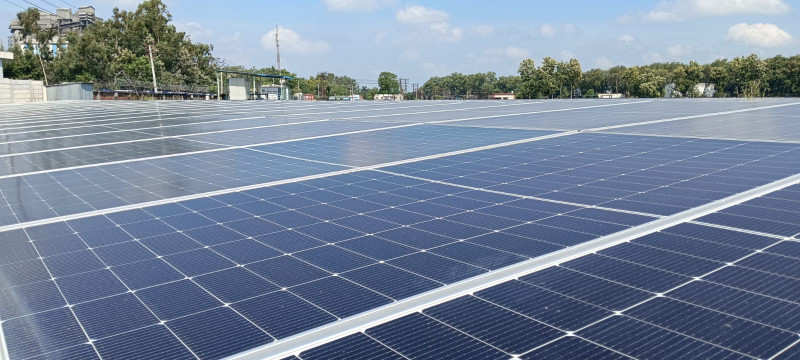
"The Union Budget 2026 is a critical opportunity to deepen India's renewable energy transition by strengthening decentralised and storage-linked solutions alongside large-scale projects. Greater focus on distributed solar applications, energy storage, and last-mile infrastructure will be key to improving grid resilience, reducing transmission losses, and ensuring reliable power access, especially in rural and high-demand regions.
Policy incentives that support domestic manufacturing, indigenous innovation, and affordable green financing can significantly accelerate adoption while reducing import dependence. Decentralised renewable solutions such as solar-powered irrigation and water management systems demonstrate how clean energy can directly support agriculture, enhance rural livelihoods, and ease pressure on conventional grids.
A forward-looking Budget with clear regulatory frameworks and targeted financial support can enable these solutions to scale sustainably, strengthening India's energy security and advancing inclusive, low-carbon growth."
AI & Digital Infrastructure
Sachin Panicker, Chief AI Officer, Fulcrum Digital –
"India stands at a pivotal moment in its AI journey, with the AI ecosystem entering a phase where scale, trust and global competitiveness will define the next decade, and the Union Budget 2026 should reinforce the nation's ambition to become a global AI innovation hub. We expect the Budget to prioritise strategic investments in foundational infrastructure — particularly in world-class data centres, cloud ecosystems, and sustainable high-performance computing — that can unlock enterprise-grade AI adoption across sectors, efficiently and responsibly. Enhancing policy clarity and regulatory certainty for AI deployment and data governance will accelerate private-sector investment and innovation, while targeted incentives and support for R&D, early-stage AI ventures and domestic IP creation will help India move from being a consumer of global AI to a significant creator.
Equally important is ecosystem-wide support, including robust skilling initiatives that prepare India's diverse workforce for an AI-augmented economy, and alignment of AI frameworks with ethical and inclusive growth goals. By focusing on infrastructure, policy and human capital, the Union Budget can catalyse next-generation digital services to accelerate India's transition into a globally competitive AI economy and ensure that India's AI growth benefits every sector — from healthcare to manufacturing to public services."
Data Centres, Cloud & Digital Sovereignty
Mr. Narendra Sen, Founder & CEO, RackBank & NeevCloud -
"As we move from vision to execution, Budget 2026 must recognize that Data Centers are the new sovereign territory and AI is the new electricity. While the projected 1.7 GW capacity is a milestone, our focus must shift from just 'housing' hardware to 'powering' intelligence.
To truly build an Atmanirbhar AI ecosystem, we need a Production Linked Incentive (PLI) for Compute that prioritizes indigenous cloud platforms over foreign hyperscalers. By treating AI infrastructure as a strategic national asset—similar to highways or power grids—we can ensure that India's data remains within India's legal framework, securing our digital sovereignty for decades to come.
Cybersecurity & Digital Trust
Sunil Kr. Sharma, Managing Director & Vice President – Sales (India & SAARC), Sophos -
"India's digital economy continues to grow rapidly, requiring a commitment to cybersecurity as a fundamental component of creating an economy built on trust, economic growth and resilience as a nation. With budget 2026, we are now in a position to elevate cybersecurity as a strategic priority and make targeted investments to build cyber resilience across multiple sectors including BFSI, healthcare, government, MSMEs and more. We want to see continued policy support for AI based threat detection and ransomware prevention, as well as secure cloud adoption. This should also include incentives for the MSME sector to assist in improving their security posture. Additionally, it is essential to continue investing in developing cybersecurity skills, as well as developing stronger relationships between the public and private sectors to facilitate sharing of threat intelligence and help keep India's future in the digital space secure and resilient."
Mr. Ankit Mehta – CEO of ideaForge Technology Pvt. Ltd. on the Defense & Technology segment
"As we approach Union Budget 2026, the UAV sector stands at a pivotal juncture. The Defence Procurement Manual 2025's 'build here, buy here' emphasis has catalysed domestic manufacturing, where we are witnessing renewed momentum through increased defence allocations. To further catalyse India's ambition as a global UAV hub, it is necessary that the budget addresses both opportunities and emerging regulatory challenges.
Announcement of INR 1 Lakh crore RDI fund signalled that the government is serious about strengthening R&D in the country and developing cutting-edge technologies and intellectual properties. As a deeptech organisation committed to serious in-house R&D, we welcome this move and urge the government to expedite the execution of the scheme and disbursement of funds in this and the coming financial year.
The drone domain today is utility-focused, where customers invest basis mission capability and reliability. While the recent Rationalisation and clarification on GST rates have helped to consolidate the progress that the industry has made and will make Indian products more competitive, the budget 2026 should expand the incentivisation framework for the industry through introducing the PLI 2.0 that rewards domestic component and UAV systems manufacturers to help with creating a robust domestic ecosystem that boosts greater assurances of cybersecurity and strategic autonomy.
While drones have captured the national narrative and remain at the center stage of modern-day defence strategy, it is imperative that the government plays the role of principal demand generator if we want to increase the adoption of the technology and make India a global drone hub. Introduction of Central Sector schemes across sectors like agriculture, urban planning, utilities, mining, etc., to make drones mandatory for security, governance & compliance, and infrastructure monitoring will be crucial to accelerate the adoption. It would be crucial to carve out dedicated budgets in both capital and revenue, procurements of various departments and functions of the government to boost drone adoption and technology building.
We hope that the Budget 2026 will make announcements on this front and position India as a defence technology exporter where 'Make in India' truly means 'Made for the World’.”
Mr Anuj Chahal, Founder of Maverick Simulation Solutions, for his expectations from the upcoming Budget 2026:
"As we approach the Union Budget 2026-27, the healthcare sector has a unique opportunity to strengthen India's domestic capabilities and global competitiveness. The Budget should prioritise rationalisation of GST and duties on essential medical devices and critical inputs, including APIs, to reduce costs, improve affordability, and support scaling of advanced care across institutions.
Expanding production-linked incentives to cover APIs and high-value segments will accelerate self-reliant manufacturing, build resilient supply chains, and attract long-term investment. At the same time, targeted support for R&D, clinical validation, and digital health innovations is essential to unlock breakthroughs in AI-enabled diagnostics, precision tools, and scalable care delivery.
Equally critical is investment in human capital and skills infrastructure, including simulation-based training, digital anatomy platforms, and competency assessment systems, to ensure quality keeps pace with expansion in medical and nursing education.
A Budget that aligns incentives across manufacturing, innovation, and skill development will not only strengthen healthcare outcomes in India, but also position our MedTech sector as a globally competitive, innovation-driven industry."
“As India grapples with rising air pollution and urban congestion, Budget 2026 is an important opportunity to strengthen shared and low-speed electric mobility as a core pillar of clean transport. While EV policy support has largely favoured personal vehicle ownership, low-speed electric vehicles that power last-mile connectivity and urban deliveries remain outside key incentive frameworks, despite their proven impact. The sector also continues to face structural challenges under GST. While EVs purchased with fixed batteries attract 5% GST, battery-as-a-service models are taxed at 18%, with no refund on input tax credits, leading to significant capital blockages. Rationalising GST, including LSEVs within subsidy and fleet-conversion mandates, and incentivising shared mobility can meaningfully reduce congestion, lower emissions, and make clean mobility more accessible at scale.” RK Misra, Co-founder and President-Ecosystem Partnerships, Yulu.
Akansha Agarwal, Co-founder & CMO, Int2Cruises
Quote:
"As we approach the Union Budget, easing the taxation framework for overseas travel, particularly TCS, is critical for improving affordability and planning confidence among travellers. Under the current structure, overseas tour packages attract 5% TCS up to ₹10 lakh and 20% beyond that, and cruise holidays often cross this threshold once flights, visas and accommodation are bundled. Treating cruise holidays separately from overseas tour packages, similar to international flight tickets, would significantly reduce the upfront cash outflow at the time of booking. This step can encourage earlier bookings and support the long-term growth of India's outbound cruise travel market."
Startups, Housing & Consumer Demand
Spokesperson: Shezaan Bhojani, CEO & Co-founder, DesignCafe
Quote:
"As we approach Union Budget 2026, there is a strong expectation for policies that stimulate housing demand and consumer spending while maintaining fiscal discipline. For the organised home interiors and home improvement ecosystem, support through faster regulatory approvals, GST rationalisation on interior and renovation services from 18% to 5%, and targeted incentives for first-time homebuyers could act as key growth enablers. Additionally, encouraging the use of sustainable and certified materials can accelerate the shift toward tech-enabled, organised players. Such measures would strengthen consumer confidence, improve transparency, and generate large-scale skilled employment across design, manufacturing, and execution, contributing meaningfully to India's urban growth story."
Dr Vandana Dr Vandana Singh- Chairperson, Aviation Cargo, Federation of Aviation Industry in India (FAII)
"India's economy is showing resilience with real GDP growth around 6.5% in FY25, underpinning broader industrial expansion. The logistics market, projected at ~US$384 billion in 2026 and growing at about 9% CAGR, is a vital growth engine. Air cargo throughput, now over 3.8 million tonnes, is forecast to expand at ~11.5% CAGR through 2033, highlighting rapid demand from e-commerce and exports. In aviation, India ranks among the top five global markets, underscoring the need for targeted budget support in cargo infrastructure, multimodal connectivity, and digitisation to sustain trade and competitiveness."
Viram Shah, Founder and CEO of Vested Finance.
"Indian investors are increasingly viewing global investing as a long term diversification strategy rather than a short term opportunity. With goals ranging from retirement planning to overseas education and dollar denominated exposure, this trend reflects a structural shift in investor behaviour. In this context, the upcoming Union Budget presents an opportunity to support this evolution by reducing friction and enabling smoother participation in global markets. Easing global investing under the LRS through measures such as building on the higher TCS threshold and rationalising TCS rates can enhance liquidity and make long term overseas allocation more seamless.
At the same time, strengthening GIFT City as India's global investment gateway complements these efforts. Clear tax neutral treatment for outbound investments and global funds can help India align with leading international financial hubs and encourage structured, goal based allocation to global assets. Maintaining the USD 250,000 LRS limit provides stability, allowing investors to plan global diversification with confidence and discipline in a world of currency volatility and evolving capital flows."
Quote From Mr Rahul Jain, Managing Director at Matrix Geo Solutions
"We at Matrix Geo Solutions expect the Union Budget 2026–27 to accelerate India's infrastructure and digital transformation by strengthening policy support for geospatial technologies, drone-based surveying, and data-driven planning. Priority should be given to wider adoption of LiDAR, GIS, photogrammetry, and AI-enabled geospatial analytics across national infrastructure, water resources, disaster management, and urban development programs. Enhanced allocations for geospatial data infrastructure, streamlined drone regulations, and incentives for indigenous technology development will improve project accuracy, speed, and cost efficiency. The Budget should also encourage integration of geospatial intelligence with BIM, digital twins, and smart infrastructure platforms. Such measures will enable better decision-making, faster execution of large-scale projects, and position India as a global leader in geospatial engineering, modern surveying, and technology-driven infrastructure development" said Mr Rahul Jain, Managing Director at Matrix Geo Solutions.
Quote From Mr. Girish Hirde, Global Delivery Head at InfoVision
"As India's IT services industry and GCC ecosystem continue to scale, the upcoming Union Budget presents an opportunity to reinforce the fundamentals that enable consistent, high-quality delivery. Continued investment in secure, reliable digital and physical infrastructure will further strengthen India's position as a preferred destination for global capability centers and long-term client programs. In parallel, clear policy direction on AI adoption and workforce readiness will be critical to building a world-class, innovation-driven engineering talent base that can deliver sustained value with confidence and predictability." said Mr. Girish Hirde, Global Delivery Head at InfoVision.
Quote From Mr. Vikram Labhe, Founder & CEO, Melooha
"We at Melooha view the Union Budget 2026–27 as a pivotal moment to accelerate India's leadership in AI-driven consumer platforms and data-led digital services. As AI adoption deepens across sectors, policy emphasis on applied AI, scalable cloud infrastructure, and sovereign data ecosystems will be critical to building globally competitive digital-first businesses. Support for multilingual AI, vernacular computing, and responsible data frameworks can unlock mass-market personalisation at scale, particularly across India's diverse user base. Incentives for AI-led SaaS innovation, digital skilling, and cross-border service exports will enable Indian platforms to expand globally while remaining rooted in trust and compliance. Simplified regulations and tax rationalisation for digital-native companies can further strengthen India's position as a hub for next-generation AI-powered consumer technology." said Mr. Vikram Labhe, Founder & CEO, Melooha.
Quote From Mr. Kunal Arya, Co-founder & MD, Zelio E Mobility
"We at Zelio E-Mobility believe India's electric mobility transition will be driven primarily by two-wheelers, where affordability, daily usability, and scale are the most critical factors. Ground-level adoption trends show that sustainable EV growth depends more on long-term structural enablers than short-term subsidies, making policy stability increasingly important for manufacturers. The Union Budget 2026–27 should prioritise deeper localisation through component-specific PLI support for battery cells, controllers, and power electronics to reduce import dependence and strengthen Make in India. Rationalising GST on electric two-wheelers and enabling priority-style, low-cost financing can accelerate mass adoption more effectively than one-time incentives. A clear national charging roadmap, including a target of 50,000 public charging points by 2027 and mandatory chargers at highways and fuel stations, along with longer-tenure capital, will be essential to building a scalable and resilient EV ecosystem." said Mr. Kunal Arya, Co-founder & MD of Zelio E Mobility.