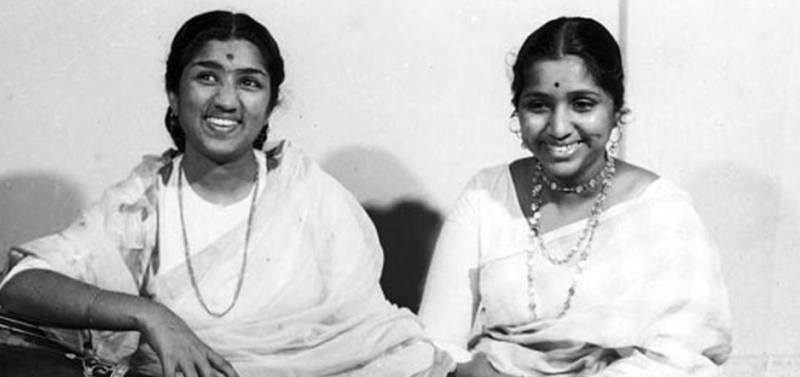
The passing of Asha Bhosle at 92 is not just the end of an iconic playback career — it is the closing chapter of India’s most extraordinary musical family story. The legendary singer, whose voice travelled across 12,000+ songs, 20+ languages, eight decades of cinema, and even a critically acclaimed acting role, leaves behind a legacy where family and film music became inseparable.
Born into the Mangeshkar household of Pandit Deenanath Mangeshkar, Asha’s life was shaped by music from the beginning. But what makes her story singular is that she did not simply inherit music — she transformed one family into the emotional soundtrack of India. Alongside sister Lata Mangeshkar, the family came to define two parallel eras of Hindi cinema.
Where Lata became the voice of purity and timeless melody, Asha carved out a radically different identity — bold, sensuous, experimental and endlessly adaptable. That contrast turned one family into two distinct musical universes, each shaping generations of listeners in its own way.
Asha Bhosle’s genius lay in how she carried relationships into music history.
Her creative partnership with O. P. Nayyar built the rhythm-driven sound of 1950s and 60s Hindi cinema. Her later marriage and legendary collaborations with R. D. Burman reinvented Bollywood through jazz, cabaret, rock, disco and soul, producing immortal songs like Piya Tu Ab To Aaja, Chura Liya Hai Tumne, Dum Maro Dum and Yeh Mera Dil. In many ways, her personal life itself became part of India’s film-music evolution.
The family legacy did not stop with her generation.
Her son Hemant Bhosle moved into music composition, while grandson Chaitanya Bhosle carried the surname into India’s pop-band era. Granddaughter Zanai Bhosle has now become the visible bridge between the family’s golden-era heritage and Gen Z nostalgia culture. This makes Asha’s story larger than one singer — it becomes the story of how one bloodline kept reinventing India’s sound across generations.
That is why her death resonates beyond celebrity news.
Every Indian household has, knowingly or unknowingly, lived through this family:
a Lata bhajan in the morning,
an Asha dance number at weddings,
an R.D. Burman retro playlist on road trips,
and now rediscovery through streaming reels and nostalgia playlists.
Few artists leave behind songs.
Asha Bhosle leaves behind an entire family architecture of Indian music.
Even her late-life acting turn in Mai added another emotional layer to this journey, proving that the woman who ruled playback could still move audiences on screen with equal force.
In the end, Asha Bhosle’s greatest legacy may not only be the staggering number of songs she sang. It may be this: