10 Asha Bhosle songs driving nostalgia searches today
- Piya Tu Ab To Aaja
- Dum Maro Dum
- Chura Liya Hai Tumne
- Yeh Mera Dil
- O Haseena Zulfonwali
- Dil Cheez Kya Hai
- In Aankhon Ki Masti
- Rangeela Re
- Tanha Tanha
- Radha Kaise Na Jale
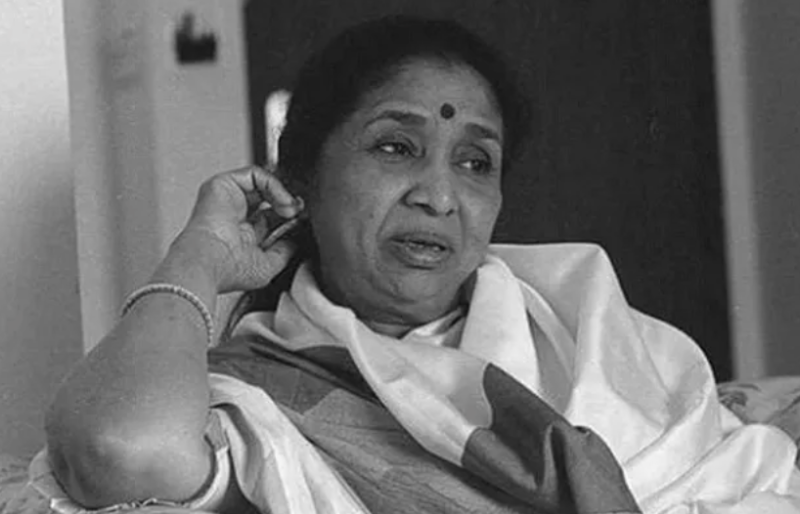
With the passing of Asha Bhosle at 92, Indian cinema has lost more than a singer — it has lost the last living bridge between Bollywood’s golden era and the modern soundtrack age. The legendary voice behind 12,000+ songs across 20+ languages, unforgettable dance numbers, timeless ghazals, and even a critically acclaimed acting role in her late 70s, breathed her last in Mumbai on Sunday after being admitted to Breach Candy Hospital.
For over eight decades, Asha Bhosle did what no other playback singer managed at this scale: she remained relevant through every single phase of Hindi cinema. From black-and-white classics and Helen’s cabaret era to Rangeela’s 90s freshness and modern rediscovery by younger listeners, her voice never stopped evolving.
This is what makes her passing such a massive cultural moment: she was not just part of Bollywood history — she was Bollywood history in song.
The 12,000-song legacy that outlived generations
Her discography reads like the emotional memory of Indian cinema itself.
She gave the screen its most seductive beats with “Piya Tu Ab To Aaja,” “Yeh Mera Dil,” and “O Haseena Zulfonwali.” She defined youthful rebellion with “Dum Maro Dum.” She immortalised romance through “Chura Liya Hai Tumne.” She stunned purists with the ghazal perfection of “Dil Cheez Kya Hai” and “In Aankhon Ki Masti.” Then decades later, she sounded astonishingly fresh in “Rangeela Re,” “Tanha Tanha,” and “Radha Kaise Na Jale.”
That rare ability to sound sensuous, playful, classical, aching, youthful and modern made her the most adaptable female voice Indian films have ever known.
The composers who turned her into an era
Asha Bhosle’s genius was amplified by some of the greatest music directors in Indian cinema.
With O.P. Nayyar, she built the template for rhythm-heavy, flirtatious female playback.
With R.D. Burman, she changed Bollywood’s sonic grammar through jazz, rock, cabaret, disco and soul, creating songs that still dominate retro playlists and reels culture today.
With A.R. Rahman, she proved even in the 1990s and 2000s that age had no hold over reinvention.
Her songs didn’t just become hits.
They became templates for how Bollywood emotions should sound.
The overlooked click-worthy angle: she also conquered the screen
A major but underused angle in most obituary coverage is her acting success.
In 2013’s Mai, Asha Bhosle made a powerful acting turn, playing a mother battling Alzheimer’s. The performance earned critical acclaim and showed that even after ruling playback for decades, she could still command the screen through silence, expression and emotional restraint.