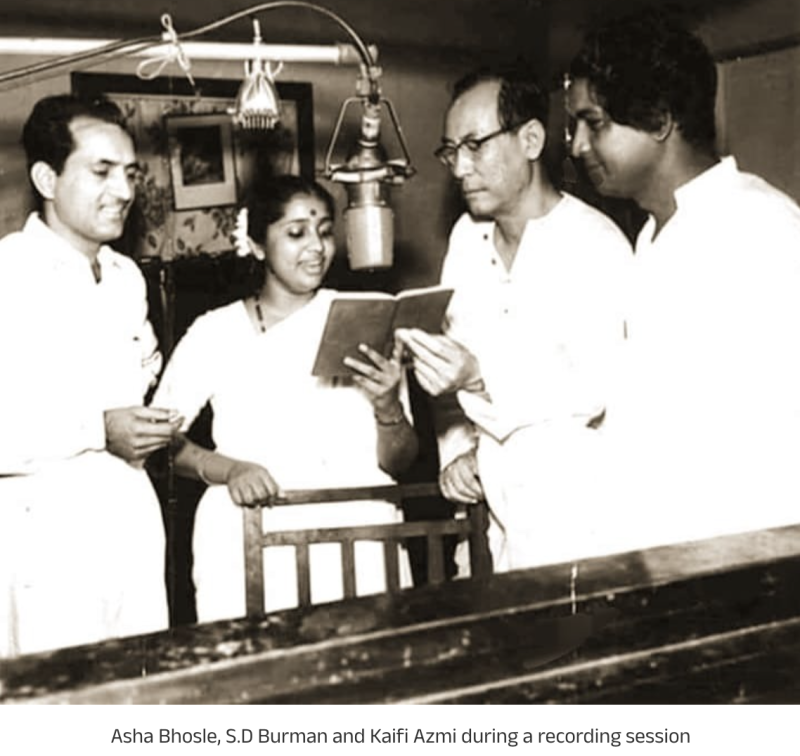
The passing of Asha Bhosle at 92 is not just the end of an iconic playback career — it is the closing chapter of India’s most extraordinary musical family story. The legendary singer, whose voice travelled across 12,000+ songs, 20+ languages, eight decades of cinema, and even a critically acclaimed acting role, leaves behind a legacy where family and film music became inseparable.
| No. | Song | Film | Year | Why It Still Clicks |
|---|---|---|---|---|
| 1 | Chura Liya Hai Tumne | Yaadon Ki Baaraat | 1973 | The ultimate evergreen romantic anthem |
| 2 | Piya Tu Ab To Aaja | Caravan | 1971 | Cabaret energy + iconic sensual vocals |
| 3 | Dum Maro Dum | Hare Rama Hare Krishna | 1971 | Counterculture classic that still trends |
| 4 | Aaja Aaja Main Hoon Pyar Tera | Teesri Manzil | 1966 | High-voltage rock-and-roll playback (The Economic Times) |
| 5 | O Haseena Zulfonwali | Teesri Manzil | 1966 | Stage performance song with unmatched recall |
| 6 | O Mere Sona Re | Teesri Manzil | 1966 | Golden-era romance favourite |
| 7 | Parde Mein Rehne Do | Shikar | 1968 | Filmfare-winning seduction classic (Filmfare) |
| 8 | Aaiye Meherbaan | Howrah Bridge | 1958 | Velvet vocals, timeless screen glamour |
| 9 | Jaiye Aap Kahan Jayenge | Mere Sanam | 1965 | Signature elegance and teasing romance |
| 10 | Yeh Hai Reshmi Zulfon Ka Andhera | Mere Sanam | 1965 | Midnight melody that never ages |
| 11 | Raat Akeli Hai | Jewel Thief | 1967 | Noir mystery meets haunting playback |
| 12 | Ude Jab Jab Zulfein Teri | Naya Daur | 1957 | Folk-pop classic from her breakthrough phase (The Times of India) |
| 13 | In Aankhon Ki Masti | Umrao Jaan | 1981 | Urdu grace at its lyrical best |
| 14 | Dil Cheez Kya Hai | Umrao Jaan | 1981 | One of Indian cinema’s greatest ghazals |
| 15 | Mera Kuch Samaan | Ijaazat | 1987 | Poetic melancholy, National Award legacy |
| 16 | Roz Roz Aankhon Tale | Jeeva | 1986 | Urban romance classic |
| 17 | Tu Tu Hai Wahi | Yeh Vaada Raha | 1982 | 80s nostalgia gold |
| 18 | Jawani Janeman | Namak Halaal | 1982 | Disco-era Asha at full swagger |
| 19 | Do Lafzon Ki Hai | The Great Gambler | 1979 | Venice romance and pure mood |
| 20 | Tanha Tanha | Rangeela | 1995 | Reinvented herself for the 90s generation |
| 21 | Rangeela Re | Rangeela | 1995 | Youthful, bold, and era-defining |
| 22 | Radha Kaise Na Jale | Lagaan | 2001 | Late-career brilliance with folk emotion |
| 23 | Vennila Vennila | Iruvar | 1997 | South Indian classic with pan-India appeal (Wikipedia) |
| 24 | September Madham | Alai Payuthey | 2000 | A.R. Rahman-era modern classic (Wikipedia) |
| 25 | Konja Neram | Chandramukhi | 2005 | A rare late-era Tamil gem from a legend (Wikipedia) |
Where Lata became the voice of purity and timeless melody, Asha carved out a radically different identity — bold, sensuous, experimental and endlessly adaptable. That contrast turned one family into two distinct musical universes, each shaping generations of listeners in its own way.