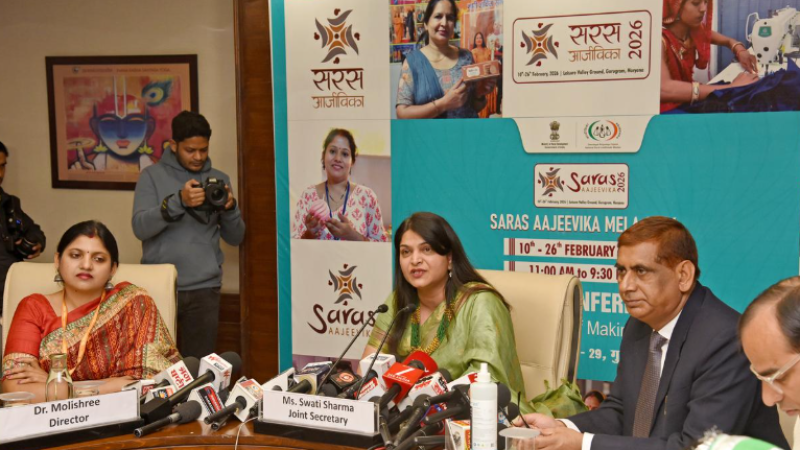
Gurugram’s Leisure Valley Park in Sector-29 is hosting the grand ‘Saras Aajeevika Mela 2026’ from February 10 to February 26, bringing together rural traditions, handicrafts, and women-led entrepreneurship on a national platform. The event is being inaugurated by Union Minister for Rural Development and Agriculture & Farmers’ Welfare Shivraj Singh Chouhan, in the presence of Ministers of State Dr. Chandra Shekhar Pemmasani and Kamlesh Paswan.
This year, over 900 women entrepreneurs—popularly known as ‘Lakhpati Didis’—from around 28–30 states are participating through Self-Help Groups (SHGs), with more than 450 stalls showcasing India’s rich craft diversity—from Kashmir’s Pashmina and Tamil Nadu’s silk to Rajasthan’s embroidery and Assam’s bamboo art. Visitors will witness live demonstrations of handicraft creation, including pottery, embroidery, and eco-friendly bamboo products, offering a unique “demo and live learning” experience beyond shopping.
A key highlight is the Knowledge and Learning Pavilion, where daily workshops are being conducted to train women in packaging, branding, business proposal development, logistics, transportation management, and social media marketing. The initiative also promotes awareness about the ‘e-Saras’ portal and partnerships with e-commerce platforms to help women sustain sales beyond the fair.
According to Joint Secretary, Ministry of Rural Development, Swati Sharma, nearly 10 crore women are currently mobilized under the Deendayal Antyodaya Yojana–National Rural Livelihoods Mission (DAY-NRLM). Of the government’s target to create 3 crore ‘Lakhpati Didis,’ around 2.9 crore women had already achieved the milestone by December 2025. She also noted that SHG loan NPAs have fallen below 2%, reflecting strong financial discipline among rural women entrepreneurs.
The fair also features a vibrant Lakhpati Didi Pavilion showcasing inspiring success stories of women who transformed their lives through entrepreneurship. A large food court offers regional delicacies—from Rajasthan’s Dal-Baati-Churma and Punjab’s Makki di Roti-Sarson da Saag to South Indian dosa-idli and Bengal’s sweets—prepared using traditional methods.