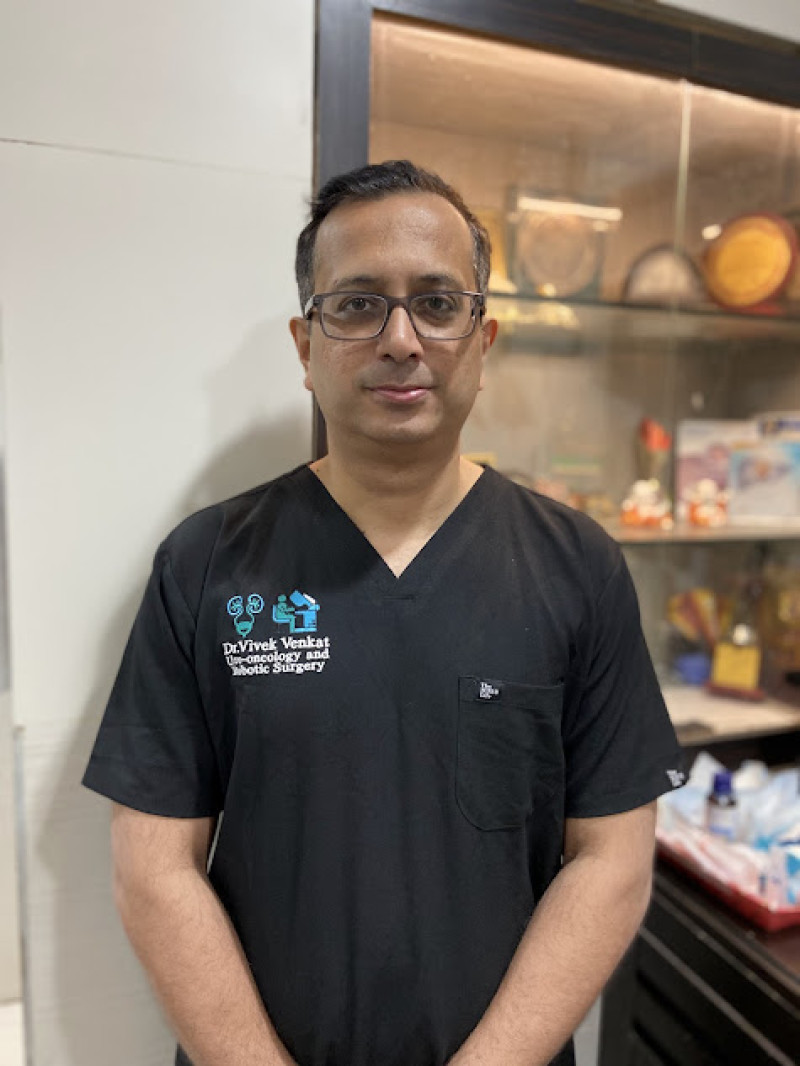
In conversation with Editor Ankur Sharma, The News Strike, Vivek Venkat, Uro-Oncologist and Robotic Urologist, highlighted that robotic surgery is transforming the treatment of prostate, kidney, and bladder cancers by enabling greater surgical precision, reduced blood loss, faster recovery, and better preservation of healthy tissues without compromising cancer outcomes. Ahead of National Doctors' Day on July 1, Dr. Venkat also raised concerns over the growing burden of prostate cancer in India, noting that limited awareness and delayed screening remain major challenges. He urged men above 50, particularly those experiencing urinary symptoms or blood in the urine, to discuss prostate cancer screening with a urologist, emphasizing that early-stage prostate cancer is highly treatable and newer therapies are improving survival even in advanced cases.
Robotic surgery is increasingly being adopted in urology—what meaningful advantages does it offer in treating prostate, kidney, and bladder cancers compared to conventional surgical approaches?
A - Robotic surgery uses a state-of-the-art minimally-invasive surgical platform.
The surgeon sits at a console and operates.
Slender (8mm) instruments are inserted into the abdomen and controlled by the surgeon's movements (robot = slave).
Robotic instruments are “wristed” allowing more flexible and precise movements.
The robotic camera provides a magnified (up to 12 times) 3-dimensional view.
All these are significant advantages when performing Uro-oncologic surgeries for the prostate, kidney and bladder. The surgery can be performed without any compromise in cancer control. Robotic surgery further provides the advantages of reduced bleeding, faster recovery, and better preservation of normal structures resulting in improved functional outcomes and reduced complications. All this is crucial in managing complex surgeries for prostate, kidney and urinary bladder cancer.
Prostate cancer cases are rising in India, yet awareness and early screening remain limited. What are the biggest myths and missed warning signs men should pay attention to?
A - Most men are not even aware of what the prostate is and that it can develop cancer. In fact 1 in 8 men will develop prostate cancer during their lives. People often believe that cancer is a death sentence but prostate cancer, especially if in the early stages can be cured in most men. Even in advanced stages men can live 3-5 years at least and newer treatments are adding to this life span.
All men above the age of 50yrs should discuss prostate cancer screening with their urologist. This is especially needed in those who have urinary symptoms like reducing flow of urine and increased frequency. Blood in the urine is an important warning sign which should be heeded and investigated.
How is the treatment landscape for urological cancers evolving in India, particularly with the rise of minimally invasive and precision-led surgical interventions?
Urology has been at the forefront of minimally invasive surgery including robotic surgery. Today a large proportion of complex cancer operations are carried out with this approach allowing patients excellent cancer control with faster recovery.
The use of various patient and tumor factors plus certain genetic markers and tests allows an experienced Uro-oncologist to select an appropriate treatment for each patient after taking into account patient priorities. This allows more individualized and precise surgery.
Men often delay seeking medical advice for urinary or prostate-related symptoms. In your experience, what are the most common reasons for late diagnosis, and how can awareness improve?
Lack of awareness and a tendency for men to hide and ignore their symptoms are indeed the most common cause for delay in their seeking help. Regular check ups and a good dialogue between a man and his primary physician can help improve awareness and catch cases early. Further increasing awareness on a population level with public messages via the media can help. As doctors a lot of us have our own social media channels where we try to educate the public and raise awareness.
Looking ahead, what role will robotic surgery, early detection, and multidisciplinary cancer care play in improving outcomes for uro-oncology patients in India?
India is sitting on a potential time bomb of cancer cases with the increasing life expectancy associated with a large population as ours. Improving awareness and using targeted screening in high risk populations will allow earlier detection of these cases and improve outcomes with limited medical and financial toxicity. The use of surgical advances like robotic surgery and medical advances like targeted therapy, immunotherapy, ADCs, and CART therapy will allow help us improve patients quality and quantity of life in the future.