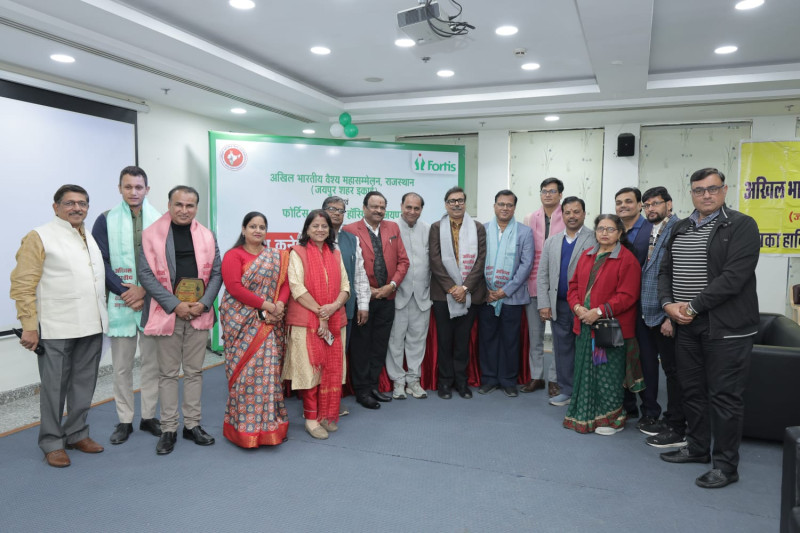
In a continued effort to promote preventive healthcare and increase awareness around lifestyle and disease-related health issues, Fortis Escorts Hospital, Jaipur, in collaboration with the Akhil Bharatiya Vaish Mahasammelan, Rajasthan organised a ‘Health Connect’ programme (Swasthya Charcha) at the hospital premises.
The interactive health session brought together leading specialists from Fortis Escorts Hospital, Jaipur, who addressed common, yet critical health concerns related to heart health, respiratory diseases, and head & neck cancers. The programme aimed to encourage early diagnosis, timely medical intervention, and healthier lifestyle choices among community members. The expert panel included Dr Rahul Singal, Director – Cardiology & Electrophysiology; Dr Ankit Bansal, Senior Consultant – Pulmonology; and Dr Jitendra Sharma, Consultant – Oncosurgery, Head & Neck, Fortis Escorts Hospital, Jaipur.
Speaking about the initiative, Dr Rahul Singal, Director – Cardiology & Electrophysiology, Fortis Escorts Hospital, Jaipur said, “Heart diseases are increasingly affecting people at a younger age due to sedentary lifestyles, stress, and poor dietary habits. Through forums like Health Connect, we aim to educate the community about early warning signs, risk factors, and the importance of timely cardiac evaluation to prevent life-threatening complications.”
Highlighting the rising burden of respiratory illnesses, Dr Ankit Bansal, Senior Consultant – Pulmonology, Fortis Escorts Hospital, Jaipur said, “Respiratory conditions such as asthma, COPD, and pollution-related lung disorders are on the rise. Awareness, early diagnosis, and adherence to treatment play a crucial role in improving quality of life. This platform allows us to directly interact with people and clarify common myths surrounding lung health.”
Emphasising early detection in cancer care, Dr Jitendra Sharma, Consultant – Oncosurgery, Head & Neck, Fortis Escorts Hospital, Jaipur added, “Head and neck cancers often go undetected until advanced stages due to lack of awareness. Tobacco use, alcohol consumption, and poor oral hygiene remain key risk factors. Community outreach programmes like this help people recognise early symptoms and seek timely medical advice, which significantly improves outcomes.”