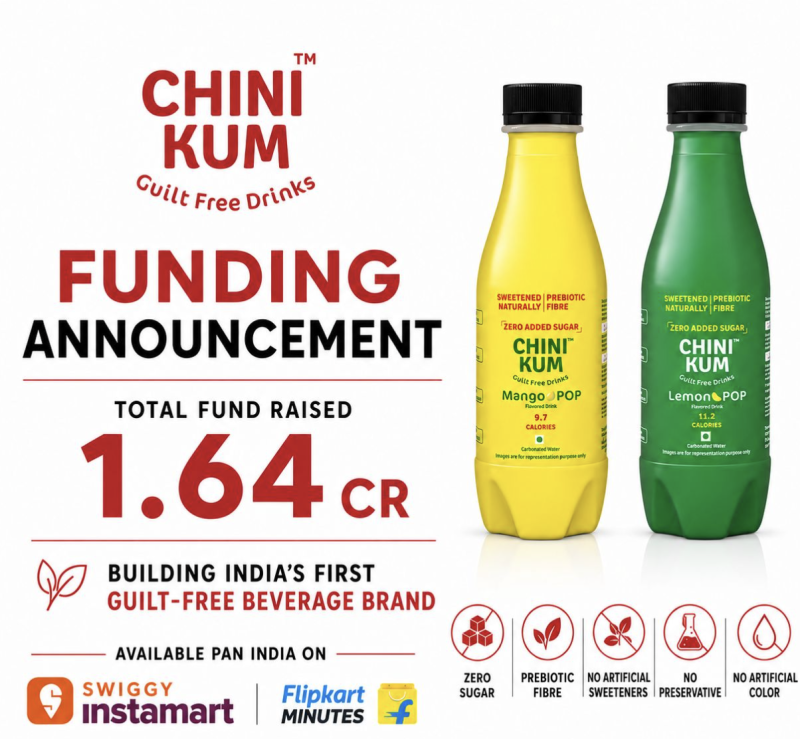
September 1, 2026: CHINI KUM, a Noida-based beverage startup, has closed a ₹1.64 crore pre-seed funding round for its zero-sugar prebiotic drinks business.
The funding round was backed by seven angel investors, including Deepika Agarwal, Swati Singhal and Aditya Babbar. The company was valued at approximately $1.13 million, with no institutional fund participating in the round.
Founded around a year ago, CHINI KUM offers carbonated beverages under its POP range along with still drinks in flavours such as lemon and mango. The company says its products contain no added sugar and use stevia and monk fruit extract as sweeteners, along with prebiotic fibre. A 250 ml can contains around 18 calories.
The pre-seed round reportedly opened in January 2026 and closed on August 29, 2026. Founder Priyank Jain announced the closure of the funding round on LinkedIn.
Funds to Support Inventory
A significant portion of the newly raised capital is expected to support inventory requirements. CHINI KUM currently does not operate its own manufacturing facility and relies on external production, requiring upfront expenditure on production runs, packaging and labels.
The company sells through quick-commerce and digital channels, including Swiggy Instamart, Flipkart Minutes and its own website, allowing it to reach consumers across multiple cities.
Growing Zero-Sugar Beverage Market
The funding comes as India's functional and low-sugar beverage market continues to attract attention from both startups and established consumer companies.
CHINI KUM operates in an increasingly competitive category, where repeat purchases and consumer acceptance of alternative sweeteners will be important for long-term growth.
The global potential of the prebiotic soda category has also drawn significant attention. PepsiCo completed its acquisition of US-based prebiotic soda brand Poppi in May 2025 in a deal valued at approximately $1.95 billion.
In India, established FMCG companies are also expanding their presence in the low-sugar and health-focused beverage segment, increasing competition for emerging brands such as CHINI KUM.