

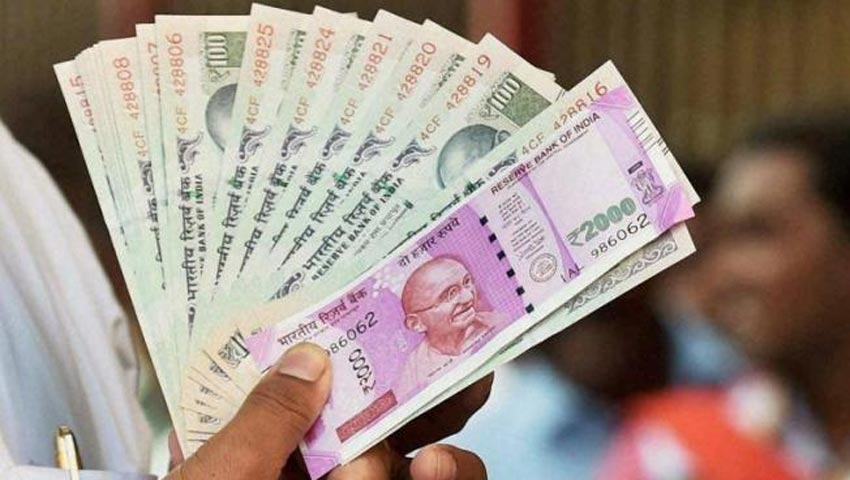
The Indian rupee’s long journey from ₹3.30 per USD in 1947 to ₹90 per USD in 2025 captures the economic evolution of the country — but the pace of depreciation has sharply accelerated in the past decade. A comparison between the two eras, 1947–2014 and 2014–2025, reveals how global shocks, domestic policies, and capital flows shaped the currency’s trajectory.
Era 1: 1947 to 2014 — Slow, Structural, Policy-Driven Slide
When India became independent, the rupee was tightly pegged under a controlled economy. For almost two decades, 1 USD hovered between ₹3.30 and ₹4.76. The first big break came in 1966, when a severe economic crisis forced a steep devaluation to ₹7.50.
From the 1970s to the 1980s, the rupee moved gradually into the ₹8–₹17 range. The 1991 Balance of Payments crisis then pushed it into the ₹25+ band as India opened its economy.
By the 2000s, with a floating exchange rate and rising global trade, the rupee settled into the ₹40–₹50 zone.
Despite global shocks like the 2008 financial crisis, the currency remained fairly stable within a wide but predictable band.
By 2014, the rupee stood around ₹60.95 per USD — marking a 67-year depreciation of about ₹57.
Average annual depreciation (1947–2014): approx. ₹0.85 per year.
Era 2: 2014 to 2025 — A Faster, Market-Driven Decline
The second era tells a very different story.
From ₹61 in 2014, the rupee began a steady slide driven by:
Stronger U.S. dollar cycles
High oil import bills
Rising U.S. interest rates
Global risk aversion
Geopolitical tensions
Domestic inflation pressures
The currency breached ₹65 (2015–2016), crossed ₹70 by 2018, slipped past ₹80 by 2022, and finally hit ₹90 in late 2025 — the weakest ever.
In 11 years, the rupee lost nearly ₹30 against the dollar.
Average annual depreciation (2014–2025): approx. ₹2.70 per year, almost 3.2 times faster than the long-term historical trend.
Side-by-Side Comparison: Two Very Different Phases
| Metric | 1947–2014 | 2014–2025 |
|---|---|---|
| Starting rate | ₹3.30 | ₹61 |
| Ending rate | ₹60.95 | ~₹90 |
| Total weakening | ₹57.65 | ~₹29 |
| Duration | 67 years | 11 years |
| Average speed | ~₹0.85/year | ~₹2.7/year |
| Pace comparison | — | Rupee weakened 3× faster |
Why the Pace Changed After 2014
Analysts point to several macro factors:
Global USD cycle: The U.S. Federal Reserve entered an aggressive tightening phase, pushing the dollar to multi-decade highs.
Oil and trade deficits: India’s heavy reliance on oil imports kept external balances under pressure.
Capital flows: Frequent foreign investment pullbacks weakened the currency.
Post-pandemic disruptions: Supply chain shocks, geopolitical tensions, and inflation drove volatility.
Domestic inflation: Persistent inflation widened the gap between Indian and U.S. real rates.
Together, these forces amplified the depreciation trend well beyond historical averages.
The Big Picture
The rupee’s journey tells two stories:
1947–2014: A long, moderate, policy-driven decline from ₹3 to ₹60 as India transitioned from a closed economy to a global participant.
2014–2025: A more volatile, market-driven era where global cycles and capital flows pushed the currency from ₹60 to ₹90 in just a decade.
Economists note that rupee depreciation is not inherently negative — it can boost exports and reflect developing-economy growth patterns — but rapid swings increase economic uncertainty.

