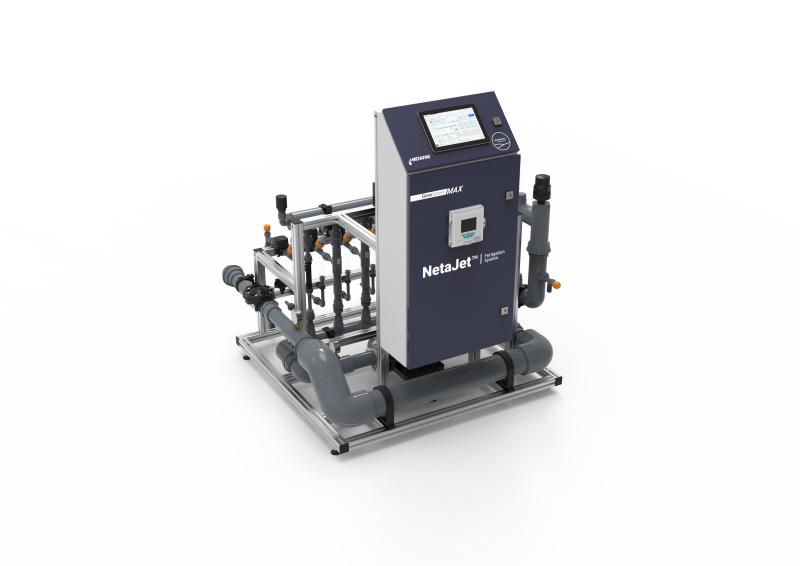
New Delhi, 31st, March 2026: Netafim, Orbia’s Precision Agriculture business the global leader in precision irrigation solutions, announced the launch of its 5th Generation AI-Enabled Automated Dosing 5G product range. The new range is designed to enable optimal fertigation management through advanced AI-powered automated dosing technology, along with intuitive remote control and monitoring capabilities. The suite of updated dosing products includes FertiKit™ 5G, FertiOne™ 5G, NetaJet™ 5G and NetaFlex™ 5G.
The Dosing 5G range by Netafim brings together advanced nutrient management technology and a simple, farmer-friendly design. Built for both open-field crops and protected cultivation, the system uses self-learning AI to precisely regulate nutrient delivery based on crop requirements, ensuring balanced application that enhances yield and improves crop quality while preventing overuse. By optimizing fertilizer, water and energy consumption, Dosing 5G lowers input costs and reduces operational effort, while promoting responsible farming practices. It also helps minimize nutrient runoff and groundwater contamination, supporting long-term soil and water sustainability. The complete Dosing 5G portfolio integrates seamlessly with GrowSphere, Netafim’s all-in-one digital platform, allowing growers to plan, monitor and manage irrigation and fertigation through a single interface. With customizable multi-channel control, farmers benefit from greater precision and automation across the entire crop cycle — from planting to harvest.
Mr. Vikas Sonawane, Chief Operating Officer at Netafim Irrigation India Pvt Ltd, said that “Farmers in India face rising input costs, water scarcity, inconsistent nutrient dosing and limited real-time visibility, often leading to wastage, uneven crop growth and lower profitability. Addressing these challenges, Netafim has introduced Dosing 5G. “This AI-powered solution brings precision, automation and remote monitoring to fertigation management, ensuring optimal nutrient delivery with minimal manual effort. By improving dosing accuracy and water-use efficiency, it helps enhance crop quality, strengthen farm profitability and support sustainable water management, enabling Indian farmers to make every drop and nutrient count.”