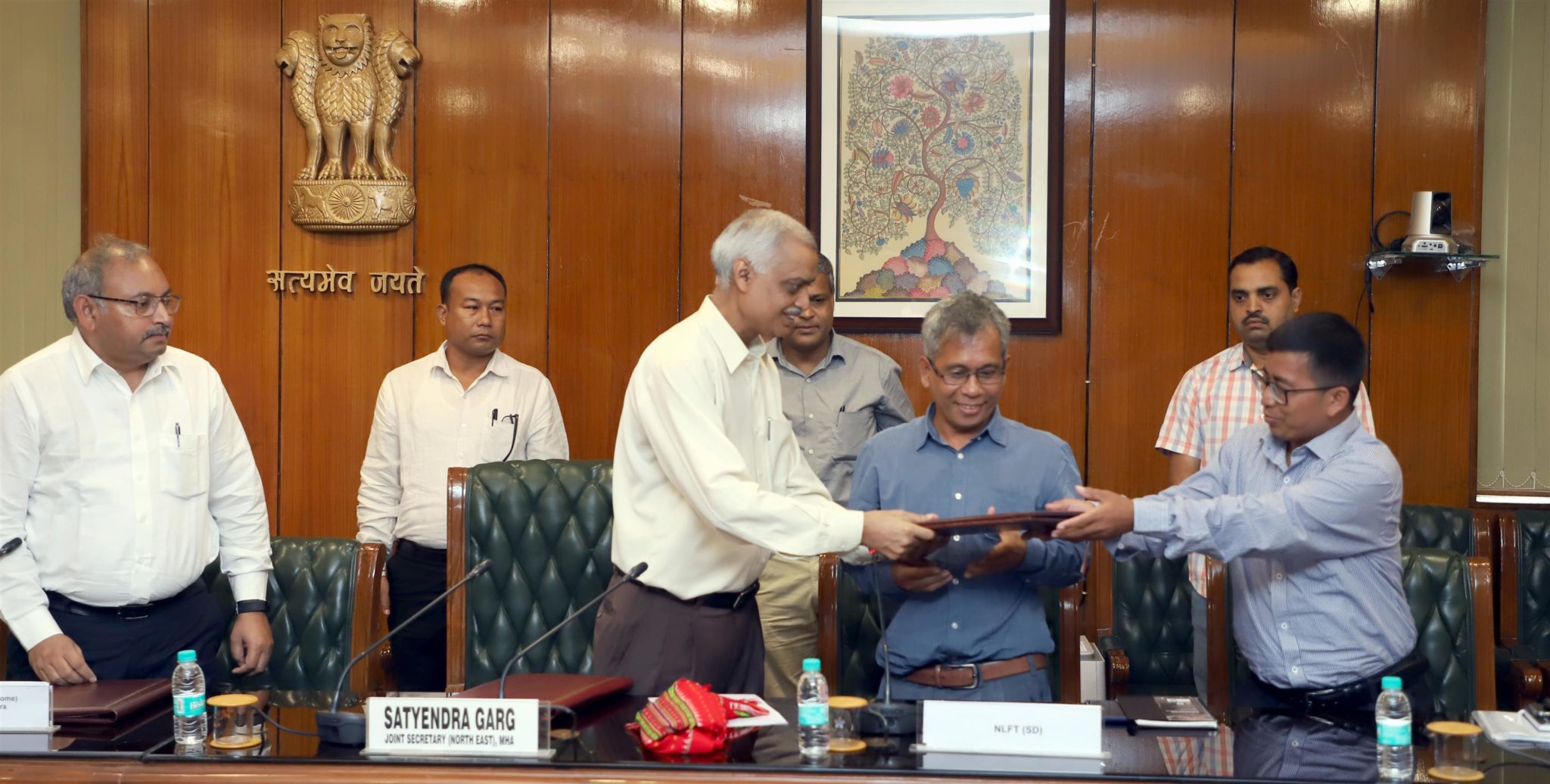
New Delhi: In a significant step toward lasting peace and stability in Northeast India, the Government of India, the Government of Tripura, and the National Liberation Front of Twipra (NLFT-SD) signed a Memorandum of Settlement aimed at ending decades of insurgency and integrating former militants into mainstream society.
The agreement marks the culmination of a peace process that began in 2015 and reflects a broader transformation taking place across the Northeast, where dialogue and development are increasingly replacing conflict and violence.
The NLFT, which had been banned under the Unlawful Activities (Prevention) Act since 1997, was one of the insurgent groups active in Tripura for several years. According to official records, the organization was linked to hundreds of insurgency-related incidents between 2005 and 2015, resulting in casualties among both civilians and security personnel. However, authorities noted that the group has not been involved in violent activities since 2016, following the initiation of peace talks.
Under the settlement, the faction led by Sabir Kumar Debbarma agreed to renounce violence, surrender arms, and operate within the framework of the Constitution of India. A total of 88 cadres are expected to surrender and join the rehabilitation process.
Government officials described the accord as an important confidence-building measure that combines security objectives with socio-economic inclusion. Former cadres will receive benefits under the Ministry of Home Affairs' rehabilitation policy, while the Tripura government will facilitate support in areas such as housing, education, skill development, and employment opportunities.
Policy experts note that successful peace agreements require more than disarmament. Long-term stability often depends on creating economic opportunities, improving governance, and addressing developmental challenges in affected regions. In this context, the Centre has indicated that proposals related to the economic development of tribal areas in Tripura will receive consideration.
The agreement is also being viewed as part of a broader trend in the Northeast, where multiple peace initiatives over the past decade have contributed to a reduction in insurgency-related violence and improved prospects for investment, infrastructure development, and social progress.
Security analysts believe that sustained engagement, political dialogue, and rehabilitation measures have played a crucial role in encouraging militant groups to abandon armed movements. The Tripura accord demonstrates how negotiated settlements can create pathways for reconciliation while strengthening democratic institutions.
For residents of Tripura, particularly those living in tribal and previously conflict-affected areas, the agreement offers renewed hope for stability, economic growth, and greater participation in the state's development journey. As former insurgents prepare to reintegrate into society, the accord represents not only the end of a chapter of conflict but also the beginning of a new phase focused on peace, inclusion, and opportunity.