

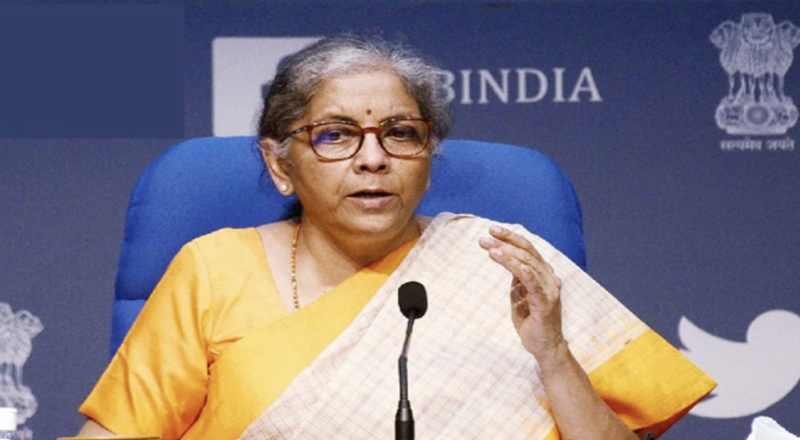
Finance Minister Nirmala Sitharaman will present the Union Budget 2026–27 in the Lok Sabha today. Following its presentation in the Lower House, the Budget will also be tabled in the Rajya Sabha. This will be the third Union Budget of the Narendra Modi government in its third term.
Ankit Kedia, Founder and Lead Investor, Capital-A.
"The announcements made today mark a clear inflection point in India's manufacturing and deep-tech journey. The expansion of the India Semiconductor Mission into equipment, materials, and full-stack IP reflects an important recognition that semiconductors and advanced manufacturing cannot be built in silos, and that value creation sits across the entire supply chain."
"By coupling this with higher allocations for electronics components, capital goods, and critical inputs such as rare earths, the Budget lays the groundwork for durable industrial growth and stronger capital formation. However, these sectors are defined by long investment cycles and high execution risk. To translate today's intent into sustained growth, investors will need greater clarity on implementation timelines, incentive design, and the role of private capital in scaling these ecosystems."
Deepak Mittal, CEO, CloudKeeper, a leading provider of cloud cost optimization solutions
The Union Budget 2026–27 provides a strong and forward-looking framework for India's IT and cloud ecosystem. By bringing all IT services under a single category with higher safe harbour thresholds and automated approvals, the Budget significantly improves regulatory clarity and ease of doing business for technology companies.
The focus on emerging technologies such as AI, along with incentives for global cloud service providers to operate through data centres in India, positions the country as a key hub for digital and cloud-led services. As enterprises increasingly adopt AI-driven and data-intensive workloads, cloud usage is expected to scale rapidly across sectors.
In this environment, financial discipline and transparency in cloud spending will become critical. The Budget reinforces the need for enterprises to balance innovation with efficiency, ensuring that cloud investments deliver measurable value while supporting sustainable growth."
In the run-up to the Budget, the Finance Minister conducted extensive pre-Budget consultations with a wide range of stakeholders. These included economists, industry representatives, trade unions, experts from the education and healthcare sectors, MSMEs, trade and services bodies, as well as participants from the financial sector and capital markets. Separately, Agriculture Minister Shivraj Singh Chouhan held detailed consultations on agriculture and rural development and submitted a consolidated set of recommendations to the Finance Minister.
With today’s presentation, Nirmala Sitharaman will deliver her ninth consecutive Union Budget, a record since assuming office in 2019. The Budget speech is expected to outline the government’s revenue and expenditure plans for the next financial year, while also setting out its broader economic strategy. Key focus areas are likely to include economic growth, job creation, and fiscal consolidation.
As part of the Budget formulation process, the government also sought inputs from citizens across platforms, including youth participation initiatives. These suggestions are expected to find reflection in the Union Budget 2026–27.
The complete set of Budget documents will be made available on the Union Budget Mobile App and the official website after the Finance Minister concludes her speech in Parliament. Post-presentation, Sitharaman will interact with around 30 college students from various regions of the country.
Shantanu Rooj, Founder and CEO, TeamLease Edtech
The focus on AI as a force multiplier for governance and driving sustainable economic growth is a welcome move. AI is taking center stage in Education and Employability. The talent pool and workforce will benefit through AI skills to enhance productivity and quality. Higher education and AI are inseparable. Students must be prepared for the workplace of the future by acquiring degrees that are work integrated and carry AI skills.
“The Finance Minister's emphasis on a supportive ecosystem is a clear signal to industry to step up and partner in nation-building. To deliver on the three Kartavyas, we must collectively back reforms, strengthen our financial systems, and embrace technologies like AI with speed and scale. If government and industry move in sync, India can unlock its full potential and create sustainable, inclusive growth.”- Mr Rikant Pittie, CEO and Co-Founder of EaseMyTrip.
Mr Sudhir Kunder, CBO of DE-CIX India-
"The Budget 2026 tax holiday for global cloud providers using India-based data centres is a decisive policy move that positions India as a long-term digital infrastructure and AI growth hub. As hyperscalers expand, the real differentiator will be resilient, carrier-neutral interconnection that enables low-latency access, ecosystem depth, and scalable digital economies," said Mr Sudhir Kunder, CBO, DE-CIX India.
Mr. NS Venkatesh, CEO, Bharat InvITs Association
"We welcome the Union Budget 2026 and the government's sustained focus for growth through infrastructure. The planned growth in public capital spending to ₹12.2 lakh crore in FY27, with the focus on funding urban infrastructure through tools like InvITs and REITs and organizations like NIIF and NaBFID, shows that the government has strong long-term policy goals. The focus on cities with populations above five lakh, including tier-2 and tier-3 cities, will help deepen the pipeline of mature, revenue-generating infrastructure assets. For investors, this translates into better-quality assets, enhanced cash flow visibility, and a more predictable long-term investment offer through InvITs. Such policy continuity is essential for sustaining long-term capital participation in India’s infrastructure ecosystem. The path towards fiscal deficit management and keeping the Government borrowings within the manageable level will ensure non crowding out of the private sector from the borrowing space. This will in turn enable the private sector to borrow and invest in long term infrastructure assets"
Ajitabh Bharti, Executive Director and Co-founder, CapitalXB
* India's Union Budget 2026-27 prioritizes MSMEs as engines of jobs and exports, contributing 45% to India's outbound shipments.
* Key move: Doubled CGTMSE guarantee to Rs 10 crore for micros/small units, unlocking Rs 1.5 lakh crore credit over five years at just 1% fee.
* Startups and exporters get Rs 20 crore cover, easing scaling without collateral hassles.
* MSME credit cards up to Rs 5 lakh via Udyam portal target 10 lakh first-timers, streamlining access for the smallest players.
* Investment/turnover thresholds hiked 2.5x, helping firms grow without losing benefits.
* Rs 10,000 crore Fund of Funds fuels startups; special scheme aids 5 lakh women/SC/ST entrepreneurs with Rs 2 crore loans.
* Sector boosts for footwear (22 lakh jobs), toys, coir, leather via clusters, Mudra, TReDS, and SFURTI modernization.
* Performance shines: MSME credit up 21.8% YoY to November 2025; 5.93 crore units registered.
* ECLGS extended to renewables/logistics; interest rates around 12.27% remain competitive.
* Overall, transformative for formalization and growth, though execution on delays and skills will
* decide long-term wins.
Dr. Gaurav Kulshrestha, CIO, Nexedge Capital
“This Budget balances the strategic ambitions of Viksit Bharat with fiscal discipline, at a time when many global economies are pursuing looser fiscal paths. The focus on future-facing sectors such as biopharma, electronics and semiconductors, GCCs, and data centres aligns with India’s long-term priorities and should attract stable, high-quality FDI. Targeted MSME support will help protect employment and sustain growth. Measures to deepen NRI participation, broaden fixed-income markets through stronger corporate and municipal bond frameworks, simplify foreign investment rules, and enhance IFSC competitiveness are constructive for long-term capital allocation. While the STT hike affects near-term F&O sentiment, broader market impact remains limited, with fiscal assumptions staying prudent.”
Shafiulla Hirehal Nuruddin, Founder and managing director at Greenspace Herbs-
It is really gratifying to see the Union Budget 2026-27 place such a strong and unambiguous emphasis on the Ayush sector. We genuinely appreciate the government's focus on this arena, as it recognises that Ayurveda is no longer just a traditional practice, but a rapidly rising sector that merits this level of national support.
The proposal to build three new All India Institutes of Ayurveda and the plan to improve Ayush pharmacies and drug testing facilities are critical measures. These initiatives will help build a much-needed ecosystem of higher certification standards and bring in the skilled personnel required to move the industry forward.
The government is looking very closely at the potential of traditional medicine, and by strengthening the WHO Global Traditional Medicine Centre for evidence-based research, they are providing the validation the industry needs to grow. We look forward to the industry collaborating closely with the government to build on this momentum and ensure these regional hubs and training programs create lasting opportunities for health professionals across the country.
Jaideep Ahuja, Managing Director & CEO, Ahuja Residences -
The Union Budget 2026's increase in public capital expenditure to ₹12.2 lakh crore, marking a nearly 9% rise over last year, reinforces the government's long-term focus on infrastructure-led growth. Enhanced connectivity, urban expansion, and development of commercial and logistics hubs are expected to translate into stronger demand for travel and accommodation across emerging and established markets.
Commenting on the announcement, Jaideep Ahuja, Managing Director & CEO, Ahuja Residences Private Limited, said, "The continued year-on-year increase in public capex reflects a consistent commitment to building demand through infrastructure. This directly supports both hotels and serviced apartments by enabling expansion into growth corridors where business travel and long-stay requirements are accelerating.
Mr. Vishal Suri – Managing Director & CEO, SOTC Travel Limited
"Budget 2026 sets the stage for accelerated growth in India's travel and tourism sector. The reduction of TCS on outbound travel to 2% will make international holidays more accessible and boost demand. While the establishment of five regional medical tourism hubs positions India as a leading destination for integrated hospitality and healthcare. High-speed rail corridors, city economic regions and the expansion of nature-based and experiential tourism—from eco-trails and mountain circuits to wildlife and heritage experiences—will enhance connectivity and diversify offerings. Initiatives such as training 10,000 tourist guides, establishing the National Institute of Hospitality, and developing a Digital Knowledge Grid will professionalize the workforce and strengthen planning. Together, these measures enhance the competitiveness of Indian tour operators, attract investment, and create new opportunities across the tourism value chain. We welcome these progressive steps, while continuing to advocate for formal Industry status for tourism to unlock the sector's full potential."
Mr Chirag Agarwal, Co-founder & CEO, TravClan
"The Union Budget 2026 takes a constructive step towards addressing some long-standing operational challenges faced by outbound travel businesses. The reduction of TCS on overseas tour packages to 2% is a welcome move and will ease immediate cash-flow pressure for both travellers and agents, particularly in high-volume, cross-border transactions.
Effective implementation will now be critical. Clear guidance on refund timelines, reconciliation processes and system readiness will determine how quickly this relief translates into day-to-day business operations. Beyond taxation, access to formal credit for booking-led travel businesses remains an important gap, as traditional lending frameworks still do not fully account for advance collections and extended settlement cycles.a
As outbound demand continues to expand from non-metro markets, sustained policy focus on international connectivity, efficient payment systems and regulatory simplicity will be important to support long-term growth. Overall, the Budget signals positive intent, and targeted follow-through can further strengthen the operating environment for Indian travel businesses."
Aditya Sanghi, CEO of Hotelogix
"The Union Budget 2026–2027 sends a clear signal that the Indian tourism and hospitality industry is one of the most important drivers of jobs and growth. Enabling this industry through initiatives such as a National Institute of Hospitality, talent upskilling, and digital infrastructure are welcome steps. However, execution on the ground will define success in the long run. It must empower homegrown midscale hotels in Tier II/III markets to access modern solutions and a skilled workforce easily to thrive sustainably. At Hotelogix, we see this as a pivotal moment to support hotels in this segment with cloud-led, scalable technology that helps them ensure smarter operations and deliver consistently better guest experiences."
Mr Prashant Mathur, CEO, Saatvik Green Energy-
"This Budget 2026 sends a strong and well-balanced signal for India's clean-energy manufacturing ecosystem and marks a major step forward for India's solar manufacturing story. By locking in long-term domestic demand through a record ₹12.21 lakh crore capital expenditure outlay and a nearly 29% increase for the PM Surya Ghar Muft Bijli Yojana, the government has created much-needed visibility for large-scale investments across the solar value chain. The extension of customs duty exemptions for lithium-ion cell manufacturing to battery energy storage systems directly strengthens both energy transition and energy security, while the exemption on critical inputs such as sodium antimonate for solar glass will improve cost competitiveness and accelerate domestic capacity creation in a strategically vital segment.
At the same time, rationalisation of customs exemptions and correction of duty inversions signal a shift from protection to performance supporting domestic manufacturing while enhancing export competitiveness. The continued focus on carbon capture technologies and long-term support for nuclear power underline a technology-agnostic approach to decarbonisation. For manufacturers like us, this clarity is a green light to scale to multi-GW capacities, invest in deep backward integration, and position India as a credible China+1 alternative and a globally competitive, export-ready clean-energy manufacturing hub."
Mukund Vasudevan, MD SKF India (Industrial) Limited and President – India, Southeast Asia and Middle East
"The Union Budget 2026–27 delivers a clear, confidence boosting push for India's industrial growth. Despite maintaining fiscal discipline, the higher public CAPEX of ₹12.2 lakh crore signals strong momentum for manufacturing and infrastructure. Reforms focused on financial access, technology adoption, and competitiveness lay the groundwork for long-term industrial strength - key for India to scale and compete alongside with global players. Investments in freight and industrial corridors, along with logistics upgrades, will lower costs, strengthen supply chains, and make Indian manufacturing more efficient.
MSME-focused steps such as the Growth Fund and an expanded TReDS ecosystem should ease liquidity and improve access to capital. Overall, the Budget reinforces India's direction toward localization, private investment, and resilient industrial growth, giving businesses greater clarity and confidence to scale."
Quote by Mr. Ajitesh Korupolu, Founder and CEO of ASBL
"As a developer rooted in Hyderabad's growth journey, ASBL sees the Union Budget 2026 as a clear signal that the city is being positioned as a strategic anchor in India's next phase of connectivity-led development. The proposed high-speed rail network linking Hyderabad with Bengaluru, Chennai, and Pune is not merely about faster travel, it establishes Hyderabad as the central convergence point of India's most powerful economic ecosystems.
Bengaluru may lead in IT, Chennai in manufacturing, and Pune in industrial-technology integration, but Hyderabad already integrates all three at scale and more. As India's largest pharmaceutical hub, a rapidly expanding GCC powerhouse, and a growing centre for aerospace and advanced manufacturing, the city is uniquely placed to extract maximum economic value from this tri-city connectivity. This infrastructure will not distribute growth evenly, it will compound it where capability already exists, and Hyderabad stands to gain the most.
With over 355–360 Global Capability Centres employing more than 3,00,000 professionals, the addition of 35 Fortune 500 GCCs in 2025 alone, and sustained investment momentum across life sciences and technology, enhanced rail connectivity will further accelerate capital inflows, high-quality job creation, and GDP expansion for the city.
At a national level, the Budget's emphasis on improved credit access, asset monetisation, and REIT-driven capital participation reinforces long-term confidence in real estate and infrastructure. As India's real estate sector advances towards a $1 trillion valuation by 2030, cities like Hyderabad where economic depth, infrastructure readiness, and livability already converge, will lead the next cycle of urban and investment growth."
Quote on Post Union Budget 2026 by Mr. Karteesh Reddy, CEO of GHR Infra
"The Union Budget 2026 certainly charts a forward-looking roadmap for India's and especially Hyderabad's real estate industry. While high‑speed rail connectivity across key growth corridors (announced in the budget) will clearly strengthen Hyderabad's realty, the extended tax holiday till 2047 for foreign companies establishing cloud service data centres in India will likely have significant and positive impact on the city's realty developers, home buyers, and residents as well.
Major companies with data centers in Hyderabad already include global technology giants, Amazon Web Services (AWS), Microsoft Azure, and Google Cloud, alongside major colocation providers, such as CtrlS, and NTT. Considering that the tax holiday would mean over 20 years of tax-free operations for global cloud businesses, this will attract many more global companies to Hyderabad. This surge will likely drive ancillary demand for high-quality housing and integrated urban ecosystems.
At GHR Infra, we see this as additional cushion that will aid Hyderabad's next growth chapter. Also, our focus remains on crafting sustainable, wellness-driven communities that align with the government's vision, creating spaces that foster livability, inclusivity, and resilience, while positioning Hyderabad as India's model city for future-ready living."
Post- Budget Quote on health and tech from *Avanish Agarwal, Founder of Nutriiya*
This year's Budget acknowledges a simple truth. Healthcare cannot scale without technology, and technology must be grounded in real human outcomes. The push toward digital health systems and responsible use of AI creates room for founders like us at Nutriiya to build solutions that are preventive, practical, and deeply Indian in context. When AI is used to support everyday health decisions like nutrition, lifestyle, and early risk identification it reduces long-term burden on the system.
The Budget signals continuity, not hype, and that consistency is what founders need to build meaningful, trustworthy health innovation at scale.
Mr. Harish Krishnan, CIO – Equity, Aditya Birla Sun Life AMC Ltd.
"In the backdrop of persistent global uncertainty, the budget reflects realism on policy and fiscal prudence. The government remains steadfast on its commitment to consolidation; there is a notable shift from supply-side capex-led stimulus towards supporting domestic consumption. However, elevated borrowing levels may case market discomfort in the near term but expectations in the budget seem to be conservative and leave room for upside. The outlook for equities over the medium term does not alter too much. We believe the current phase represents a reset – investors should reassess portfolios with a fresh lens, as new themes are likely to emerge as winners over the next 3-4 years."
Mr. Kaustubh Gupta, CIO – Fixed Income, Aditya Birla Sun Life AMC Ltd.
"The budget is largely an extension of the government's core philosophy of supply driven growth, boosting manufacturing capacity and macro stability. Fiscal discipline, incentive for manufacturing and simplification of doing business seems to be the key thrust area. Overall, the budget numbers seem to be conservative and there is possibility of over-achieving targets both for FY26 and FY27. Continued focus on capex while being fiscally prudent also boosts medium to long term potential growth while keeping inflation in check."
Jitendra Kumar Agarwal, Joint Managing Director, Genus Power Infrastructures Limited
"Union Budget 2026–27 reinforces India's medium-term growth trajectory by combining fiscal consolidation with a sustained public capex outlay of ₹12.2 lakh crore, providing long-term visibility for infrastructure and energy investments.
From an energy perspective, the Budget's focus on system resilience is particularly relevant. As renewable capacity scales rapidly, grid-scale Battery Energy Storage Systems will be essential to manage variability and ensure dependable power delivery. Extending basic customs duty exemption to capital goods used for manufacturing battery energy storage systems is a material step toward accelerating deployment and lowering system costs.
Energy diversification is further strengthened through customs relief for solar manufacturing inputs and a ₹20,000-crore, five-year commitment for carbon capture, utilization and storage. At scale, this reinforces the need for reliable, technology-enabled power systems to anchor India's evolving industrial base and energy ambitions."
Mr. Ajay Rao, Founder & CEO of Emiza said,-
"The Union Budget 2026-27 further instills confidence in the consumption and manufacturing-driven growth story in India by continuing its emphasis on infrastructure development, with a special focus on MSMEs. The steps taken to enhance liquidity and growth capital for MSMEs will have a direct impact on logistics and fulfillment partners catering to small and medium-scale businesses in Tier 1 and Tier 2 cities.
Contract logistics companies will find the Budget's emphasis on technology adoption, AI-assisted skill development, and digital public infrastructure particularly relevant. As the scale and complexity of supply chains increase, data-driven demand forecasting, automated warehouses, and real-time inventory visibility are becoming increasingly important to provide faster, more reliable, and more cost-effective services for MSME supply chains.
However, smooth payment cycles and simplified compliance procedures continue to be important for asset- and labor-intensive logistics companies. In summary, the Budget seamlessly weaves together infrastructure development, MSME growth, productivity, and technology to create a more robust and inclusive supply chain ecosystem in India."
Arjun Anjaria, Founder & CEO, Unbox Health
"The Budget reinforces the growing recognition that food safety and nutrition are central to long-term public health and economic productivity. As packaged foods and supplements become a larger part of everyday diets, consumers need clearer, more reliable information to make safe choices. Stronger labelling standards, wider access to accredited testing and consistent enforcement can help ensure that label claims reflect product reality. Platforms like Unbox Health complement this effort by independently testing products and publishing lab-backed ratings, helping consumers navigate complexity while encouraging brands to meet higher standards of transparency and compliance."
Parth Amin, CEO & Co-Founder, Decode Age
"The Union Budget 2026-27 is a definitive signal that India is ready to lead the longevity revolution. For years, we have argued that the future of healthcare lies in targeting the biological roots of aging rather than just managing end-stage disease. With the launch of the Biopharma SHAKTI scheme, the government has provided the missing piece of the puzzle: a massive ₹10,000 crore commitment to the science of biologics and precision medicine.
This budget effectively ends the era of 'sick-care' and marks the beginning of a data-led, preventive era. By prioritizing advanced research infrastructure and clinical networks, the government is creating the exact ecosystem needed for companies like Decode Age to scale life-extending innovations. We are no longer just talking about longevity. We are building a future where every Indian can expect more years of peak health and productivity. The mandate is clear: it is time to shift the focus from merely surviving to truly thriving."
-vs-amit-(mk).jpg)
