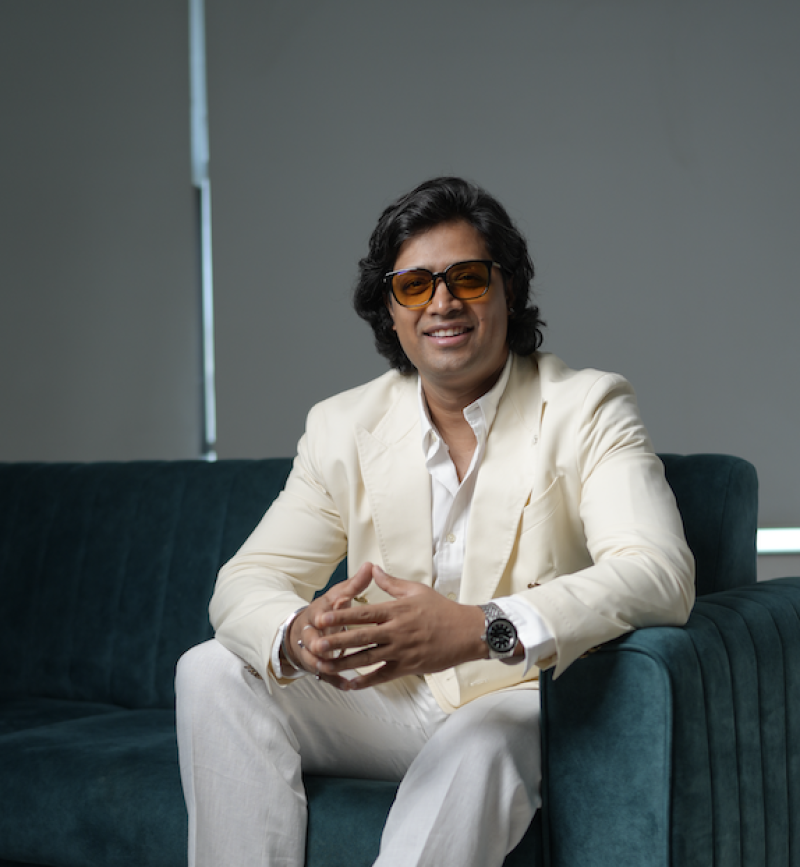
In conversation with Editor Ankur Sharma, The News Strike, Sunny Singh, Founder & CEO of DAIMANTÉ, said rising consumer awareness, value-conscious buying, and changing luxury preferences are accelerating the adoption of lab-grown diamond jewellery in India. He noted that millennials currently lead demand, while Gen Z is rapidly driving the category's growth through design-led purchasing and digital awareness rather than traditional notions of rarity. Singh added that metropolitan markets such as Mumbai, Bengaluru, Delhi NCR, Hyderabad, and Pune are witnessing the strongest uptake due to their concentration of affluent, globally exposed consumers embracing new-age luxury.
1. What has driven the sudden spike in consumer interest in lab-grown diamond jewellery in India over the last 2–3 years?
Consumers today are far more informed and value-conscious. They are realizing that lab-grown diamonds are real diamonds with the same physical and chemical properties, while offering significantly greater design possibilities and value.
2. Which customer segment is leading adoption — millennials, Gen Z, or traditional jewellery buyers?
All indications suggest that millennials are currently leading adoption, but Gen Z is rapidly accelerating growth. Both segments are design-driven, digitally informed, and less influenced by traditional notions of rarity.
3. Which cities/regions are seeing the fastest uptake, and why?
I would say, the usual suspects. Mumbai, Bengaluru, Delhi NCR, Hyderabad, and Pune are among the strongest markets. And its obvious why as these cities have a higher concentration of affluent, globally exposed consumers who are open to new luxury categories.
4. What does the display and merchandising strategy look like — are lab-grown pieces getting prime shelf space?
It’s true that progressive retailers are increasingly giving lab-grown collections dedicated visibility rather than treating them as an extension of natural diamond inventory. I strongly feel that this category performs best when it has its own identity and storytelling.
5. How are store staff being trained to sell and explain lab-grown diamonds at the counter?
It helps when staff training focuses on education rather than comparison. Sales staff and executives who are trained to explain authenticity, certification, craftsmanship, and design value will help customers make informed choices.
6. How is after-sales and certification being handled at the retail level?
There is no reinvention of the wheel here. Most established brands provide certification from recognized gemological laboratories alongside standard after-sales services such as maintenance, resizing, and repair support, similar to natural diamond jewellery.
7. Are retailers seeing repeat purchase behaviour, or is it still a one-time curiosity buy?
It’s plain to see that the category has clearly moved beyond curiosity. We are seeing increasing repeat purchases as customers become comfortable buying larger stones, gifting pieces, and expanding their personal collections.
8. What marketing formats are working — in-store, influencer, bridal expos?
In this day and age, digital storytelling, creator partnerships, and content-led education are delivering strong results. Consumers often begin their discovery journey online before engaging with the brand physically.
9. If production costs are significantly lower than mined diamonds, what justifies the current retail pricing?
As with most premium luxury brands, Jewellery pricing is influenced by much more than the diamond itself. Design, craftsmanship, precious metals, branding, retail infrastructure, certification, and customer experience all contribute significantly to value creation.
10. How much of the price is driven by the jewellery setting versus the stone itself?
It varies by product category, but in many contemporary jewellery designs, the setting, design execution, and precious metal content account for a substantial share of the final retail price.
11. Do you see prices dropping further as technology scales, and by how much?
Well, manufacturing efficiencies may continue to improve, but over time the industry will increasingly compete on design, brand equity, craftsmanship, and customer experience rather than solely on stone pricing.
12. Are brands making verified sustainability claims, or is it largely marketing?
Sustainability has helped drive awareness of lab-grown diamonds, but consumers today are also influenced by design, innovation, craftsmanship, and value. As the category matures, we expect greater transparency and standardization around sustainability claims.
13. Jewellery in India is deeply tied to occasions, legacy, and gifting. Can lab-grown diamonds carry that emotional weight? How are brands working to build cultural legitimacy — through design, storytelling, or certification?
Absolutely. The emotional value of jewellery comes from the meaning attached to it, not where a diamond was formed. Brands are building cultural relevance through thoughtful design, personal symbolism, storytelling, and memorable gifting experiences.
14. Is there a market where both natural and lab-grown diamond jewellery coexist, or will one eventually displace the other in India?
Yes, they will coexist. Natural diamonds and lab-grown diamonds serve different consumer mindsets and purchase occasions. The future is likely to be defined by choice rather than displacement.