Finance Minister Nirmala Sitharaman on Sunday announced the creation of community-owned retail outlets called ‘Self Help Entrepreneur (SHE) Marts’ for women from self-help groups, building on the success of the Lakhpati Didi programme. The initiative aims to help women SHG members transition from credit-linked livelihoods to owning enterprises, furthering financial inclusion and women-led economic growth.
In a significant infrastructure and manufacturing push, the FM also proposed a Rs 10,000 crore scheme over five years to develop a globally competitive container manufacturing ecosystem in India. Additionally, a scheme for enhancement of construction and infrastructure equipment (CIE) will be introduced to boost domestic manufacturing of high-value, technology-advanced machinery. To improve cargo movement efficiency, a new Dedicated Freight Corridor connecting Dankuni in the East to Surat in the West was also announced.
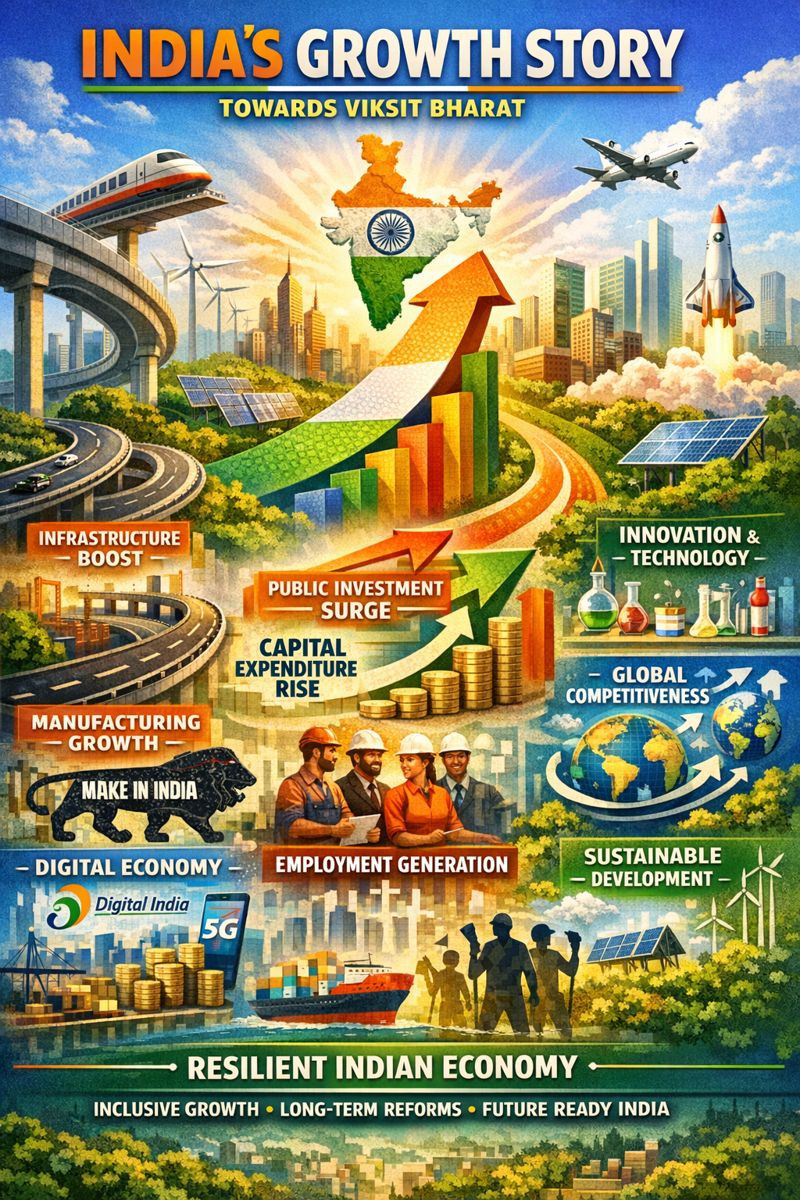
On the governance front, the Budget allocated Rs 30 crore to the Lokpal and Rs 54.56 crore to the Central Vigilance Commission (CVC) for the 2026–27 fiscal. The government also plans to accelerate the recycling of real estate assets of Central Public Sector Enterprises (CPSEs) through dedicated Real Estate Investment Trusts (REITs), leveraging them as instruments for asset monetisation. These measures collectively aim to enhance manufacturing, empower women entrepreneurs, and strengthen transparency and infrastructure.
Speaking on the Union Budget 2026, Sarah Sarosh, Founder & CEO of Impulse Coffees says: This budget clearly recognises the role of consumer-led businesses and MSMEs in driving India's next phase of growth. For founders, the focus on domestic manufacturing, supply-chain resilience, and ease of doing business is far more meaningful than short-term incentives. It allows brands to think long-term and scale with confidence.
What stands out is the push towards strengthening local ecosystems, whether through agriculture, production, or digital infrastructure. For D2C brands, this directly impacts cost efficiency, speed to market, and the ability to build globally competitive brands rooted in India. The real impact will lie in execution, but directionally, this budget creates a stronger foundation for sustainable brand building.
Budget 2026 reaction: Quote by Mr. Umang Bansal, Chairman, Polo Elevators
"The Union Budget 2026 is a forward-looking and very encouraging step for India's manufacturing sector. With Aatmanirbharta at its core, the focus on scaling up seven strategic sectors, rejuvenating legacy industries, and creating Champion MSMEs shows that the government is committed to building a resilient and self-reliant industrial ecosystem. The ₹10,000 crore SME Growth Fund, along with measures to enhance skill development and access to new markets, will empower manufacturers to formalize processes, upgrade technology, and compete confidently on the global stage. At Polo Elevators, this aligns perfectly with our mission to deliver high-performance lifts and critical construction equipment that support the country's infrastructure and urban growth.
We also welcome the expansion of the Electronics Components Manufacturing Scheme to ₹40,000 crore and the introduction of the Construction and Infrastructure Equipment scheme. Strengthening domestic manufacturing of technologically advanced equipment, from elevators and firefighting systems to tunnel-boring machines for metros and high-altitude roads, will help companies like ours invest in innovation, enhance supply-chain resilience, and create high-quality jobs. Taken together with the focus on city economic regions and long-term infrastructure development, the Budget provides a strong foundation for Indian manufacturing to grow sustainably, drive exports, and contribute meaningfully to the country's USD 7 trillion economy vision," said Mr. Umang Bansal, Chairman, Polo Elevators
"As we work closely with the government to strengthen India's infrastructure and surface transportation, we see Budget 2026-27 as a truly transformative step for the sector. Infrastructure is the backbone of long-term growth, and initiatives to develop projects in tier-II and tier-III cities, as well as urban areas with populations above five lakh, will bring development to people's doorsteps. Upgraded roads, railways, and urban infrastructure will enhance connectivity, attract industries, and generate jobs, helping to reduce pressure on congested metros and support more balanced regional growth.
The focus on efficient project delivery, new infrastructure pipelines, and reviving stalled projects will energize the construction sector and the broader economy. The announcement of seven high-speed rail corridors, Mission Purvodaya in the eastern region, and measures like the Dedicated Freight Corridor, expanded national waterways, and coastal cargo schemes will not only make travel and logistics faster and safer but also unlock regional economic potential. Initiatives such as the Infrastructure Risk Guarantee Fund and dedicated REITs to monetize CPSE assets provide the confidence developers and investors need to take on ambitious projects. Together, these measures reflect a holistic vision for resilient, future-ready infrastructure, fostering sustainable urban development, supporting private investment, and laying a strong foundation for India's long-term economic growth" said by Mr. Sanjay Kumar Sinha, Founder & Managing Director, Chaitanya Projects Consultancy.
Mr. Gaurav Sachdeva, Joint Managing Director and CEO, JSW One Platforms Limited-
"Budget 2026 takes a structured approach to strengthening MSMEs by addressing three persistent gaps - equity, liquidity, and capability. Measures such as the SME Growth Fund, stronger invoice-based financing through TReDS, and professional support via Corporate Mitras are aimed at improving cash-flow predictability and execution capacity, particularly beyond the metros.
This is less about short-term stimulus and more about building systems that allow manufacturing and construction MSMEs to scale with discipline."
Mr. Masood Mallick, Chairman, CII National Committee on Waste to Worth Technologies and Managing Director & Group CEO, Re Sustainability Limited-
The Union Budget 2026–27 marks a decisive shift in how India approaches resource security and decarbonisation—treating them as strategic economic priorities rather than regulatory afterthoughts.
The INR 20,000 crore commitment to Carbon Capture, Utilisation and Storage (CCUS) over five years is a particularly important signal. It directly addresses the competitiveness challenge Indian industry faces under mechanisms such as the EU’s Carbon Border Adjustment Mechanism and provides a credible pathway for hard-to-abate sectors like steel and cement to remain globally competitive while decarbonising.
Equally significant is the focus on building domestic capability across the critical minerals value chain—from exploration to processing. Duty exemptions on capital goods for critical mineral processing, along with support for rare-earth corridors in mineral-rich states, will strengthen urban mining and large-scale resource recovery.
For industries engaged in recovering value from end-of-life materials, this recognition of secondary resources as strategic assets is both timely and overdue.
The extension of duty exemptions for lithium-ion cell manufacturing in battery energy storage systems, and the rationalisation of excise duty on biogas-blended CNG, reflect a sophisticated understanding of how clean energy transition and circularity reinforce each other. These measures will unlock investment in recovery infrastructure and accelerate the shift from linear to circular industrial models.
By placing execution, scale, and infrastructure at the centre of its approach, this Budget positions circularity as foundational to India’s manufacturing resilience and its Viksit Bharat ambitions—giving industry the confidence to invest boldly in sustainable technologies.
Mr. Bala Ramajayam, Founder and Managing Director, G Square Group-
“We congratulate the government on presenting a forward-looking Union Budget that reinforces infrastructure as a foundation for sustainable real estate growth. The Budget provides a strong tailwind for the real estate sector in Tamil Nadu, especially in Chennai and emerging growth corridors across the state.
The continued focus on infrastructure development, city economic regions, Tier I and Tier II cities, and improved connectivity will accelerate planned urban expansion and enhance the attractiveness of well-developed residential locations.
Measures to unlock real estate assets through REITs, reduce construction-phase risks for infrastructure projects and simplify property transactions involving non-residents will further strengthen ease of doing business and market transparency. Importantly, the emphasis on sustained public investment and economic stability will help improve affordability and boost homebuyer confidence.
For plotted development, this creates an enabling environment for first-time buyers and long-term investors seeking accessible, well-connected and value-driven housing options.”
Abhilesh Gupta, MD and CEO, THINK Gas:
"Budget 2026 reinforces the role of natural gas as a practical transition fuel that supports both growth and sustainability. Mandating the blending of compressed biogas (CBG) with CNG and PNG is a visionary step toward a greener India and energy security. The 20,000 crore outlay for Carbon Capture and the focus on 'net-zero' by 2070 show that the government is serious about environmental responsibility. This budget provides the structural reforms needed to transition India into a gas-based economy while ensuring that clean energy remains affordable and accessible for all."
Jitendra Srivastava, CEO, Triton Logistics & Maritime shares -
''Budget 2026-27 offers a grounded and execution-focused blueprint for strengthening India's logistics backbone. The push on dedicated freight corridors, including the Dankuni-Surat link, addresses a real gap. East-west movement has been slower than it should be, affecting port access and transit reliability. This investment goes straight at that bottleneck.
The emphasis on Tier-II and Tier-III infrastructure is equally important. Freight doesn't move only between metros. In practice, a lot of inefficiency sits in how cargo reaches smaller production and consumption centers. Improving that consistency matters more than headline capacity."
Sulabh Tandon, Chief Business Officer, airpay vyaapaar-
The Union Budget 2026–27 sends encouraging signals for small merchants and local businesses that form the backbone of India's economy. With its focus on ease of compliance and structural support, the Budget addresses real, on-ground challenges faced by shop owners and traders. By reducing friction in taxes and streamlining digital payments, it creates a clear pathway for small businesses to grow sustainably, formalise with confidence, and become active partners in India's journey toward a Viksit Bharat.
Quote from Ambit Finvest Mr. Sanjay Agarwal on the Union Budget 2026
"The 2026 Budget underscores a decisive push to make Indian MSMEs globally competitive. The ₹10,000 crore SME Growth Fund, providing equity support to high-potential MSMEs based on performance and scalability, is a landmark step toward creating MSME champions. Equally significant are measures to ease liquidity constraints: mandatory TReDS adoption by Central Public Sector Enterprises, credit guarantee support for invoice discounting, integration of GeM with TReDS, and development of receivables as asset-backed securities. The initiative to revive ~200 stressed industrial clusters further modernises infrastructure, restores jobs, and strengthens MSME competitiveness."