

Madhya Pradesh has launched a wide-ranging reform drive across higher education, technical education, and AYUSH healthcare, marking a major policy push under the leadership of Chief Minister Dr Mohan Yadav.
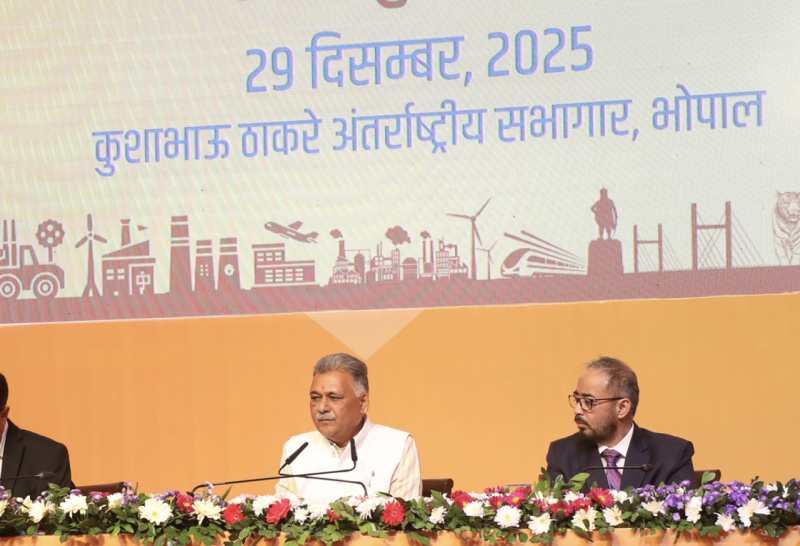
Addressing a press conference in Bhopal, Higher Education, Technical Education and AYUSH Minister Inder Singh Parmar outlined the government’s achievements over the past two years and shared the roadmap for the next three years, focusing on quality education, skill development, digital innovation, and public health expansion.
As part of higher education reforms aligned with the National Education Policy (NEP) 2020, the state has upgraded 55 institutions—one in each district—into Prime Minister Colleges of Excellence. More than ₹336 crore has been sanctioned for infrastructure upgrades, and 1,845 new posts have been created. The state has also fully implemented four-year undergraduate programmes, introduced one-year postgraduate courses, and launched interdisciplinary study options. Three new universities have been established in Guna, Khargone, and Sagar.
In the technical education sector, Madhya Pradesh has strengthened its focus on future-ready skills such as artificial intelligence, FinTech, and drone technology. The National Defence University (RRU) campus is now operational at RGPV, Bhopal, with admissions beginning from the 2025–26 academic session. Enrolment in government polytechnic colleges increased by 21.38%, while online counselling registrations rose by nearly 26%. A ₹76.56 crore Mining Technology College is also under construction in Singrauli.
Student welfare and employment initiatives remained a key focus. During 2024–25, ₹750 crore was disbursed to over 78,000 students under the Chief Minister Meritorious Student Scheme, while ₹14.55 crore supported students through the Jan Kalyan Education Promotion Scheme. Career-oriented programmes trained more than 16,000 students, leading to 1,655 direct placements. Special schemes benefited over 1.4 lakh girl students, and nearly 3.91 lakh SC/ST students received free books and stationery.
The AYUSH sector also saw significant expansion. The government approved eight new Ayurveda colleges, increasing the total to 17 across the state, and sanctioned 50-bed AYUSH hospitals in several districts. Operations have begun at 800 AYUSH Arogya Mandirs, while more than 590 medical officers have been appointed across Ayurveda, Homeopathy, and Unani disciplines. Under the ‘AYUSH at Your Doorstep’ initiative, over 25,000 sickle cell patients in tribal areas are receiving home-based care.
Looking ahead, the state plans to establish an All India Institute of Ayurveda in Ujjain, develop AYUSH wellness centres at 12 major tourist destinations, expand postgraduate AYUSH education, and strengthen digital governance across education and healthcare institutions.
Officials said the integrated approach aims to position Madhya Pradesh as a national model for education-led development and inclusive healthcare delivery.
