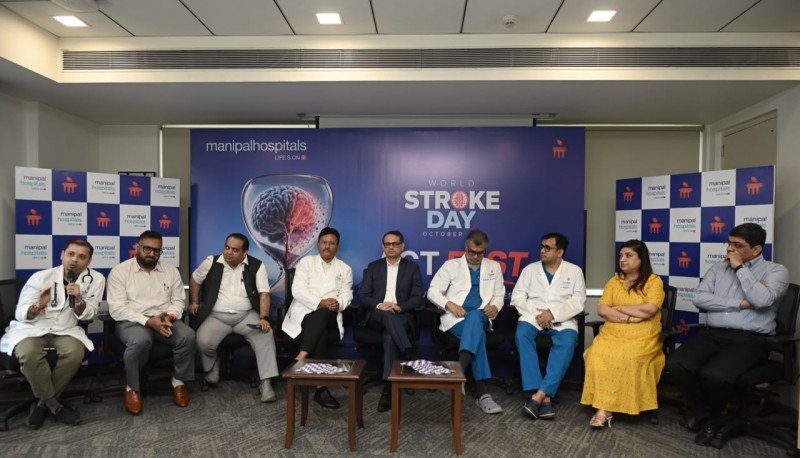
New Delhi, 30 October 2026: To observe World Stroke Day, Manipal Hospitals EM Bypass & Mukundapur organised a special awareness programme to highlight the importance of stroke prevention, early recognition of warning signs, and timelymedical intervention. The initiative aimed to educate individuals about stroke, its associated risk factors, and the importance of seeking immediate medical attention to minimise the risk of long-term disability. The programme witnessed the presence of specialisedclinicians, including Dr. Jayanta Roy – Director & Head – Neurology, Manipal Hospitals Mukundapur; Dr. Amlan Mandal – Senior Consultant – Neurology, Manipal Hospitals EM Bypass; Dr. Sukalyan Purkayastha,Director and Senior Consultant – Neurointervention & Endovascular Surgery, Manipal Hospitals East Region; and Dr. Nirmalya Roy – Consultant – Neuroradiology, Manipal Hospitals EM Bypass.As part of the awareness drive, the event highlighted the challenges associated with stroke and the importance of recognising its symptoms and seeking timely medical attention.
According to the World Health Organization (WHO), stroke occurs when the blood supply to a part of the brain is interrupted or when a blood vessel in the brain ruptures. This can deprive brain cells of oxygen and nutrients, leading to brain damage, disability,or death. Stroke is a medical emergency that requires immediate assessment and treatment. One of the key messages highlighted during the programme was the importance of recognising symptoms through the BE FAST approach. B stands for Balance, referring to a sudden loss of balance, dizziness, or difficulty walking; E stands for Eyes, which includes sudden blurred or double vision or loss of vision; F stands for Face, where one side of the face may droop or feel numb; A stands for Arms, referring to sudden weakness or numbness in one arm; S stands for Speech, which includes slurred speech or difficulty speaking or understanding others; and T stands for Time, reminding people to seek emergency medical assistance immediately and note when the symptoms began. Recognising even oneof these warning signs is sufficient reason to seek urgent medical attention.
The programme also highlighted the importance of recognising a Transient Ischaemic Attack (TIA), sometimes referred to as a warning stroke. A TIA can cause symptoms like those of a stroke, including sudden weakness, difficulty speaking, or visual disturbances, but these symptoms may resolve within a short period.However, the disappearance of symptoms does not mean that the underlying risk has passed. A TIA requires urgent medical evaluation because the risk of a subsequent stroke can be particularly high in the hours and days following the episode. People experiencingsudden stroke-like symptoms should seek emergency medical attention even if they feel better before reaching medical care.
Speaking about the importance of recognising stroke symptoms at an early stage, Dr. Jayanta Roy said, “Stroke is a medical emergency in which every minute matters. Symptoms can develop suddenly while a person is at work, driving, or carrying out daily activities. Sometimes, the first indication may be a sudden change in vision,difficulty maintaining balance, or weakness affecting one side of the body. Recognising these warning signs early is crucial because a delay in seeking medical attention can result in further brain damage and affect the chances of recovery. Immediate medicalevaluation can help determine the appropriate treatment and improve the chances of a better outcome.”