New Delhi, November 11, 2026: A 10-member committee constituted by the Tea Board of Indiahas recommended the introduction of a Minimum Sustainable Price (MSP) for tea, marking an important step towards addressing the widening gap between production costs and market realisations in the Indian tea industry. Welcoming the recommendation, theIndian Tea Association (ITA), Tea Association of India (TAI), United Planters' Association of Southern India (UPASI), Confederation of Indian Small Tea Growers Associations (CISTA) and Federation of Indian Tea Manufacturers Association (FITMA) have emphasisedthe need for a sustainable pricing framework to secure remunerative returns for tea producers, protect the interests of small tea growers and ensure the long-term viability of the sector.
India, the world's second-largest tea producer, produces approximately 1,350–1,400 million kg of tea annually, with small tea growers contributing nearly 55%of the country's total production. However, the industry continues to face mounting financial pressures, with production costs increasing significantly faster than tea price realisations. Over the years, tea prices have registered a marginal compound annualgrowth rate (CAGR) of approximately 2–3%, as compared to an estimated CAGR of 10–14% in input costs. This growing disparity has affected producers' ability to sustain operations, invest in replantation, improve productivity and maintain quality standards.
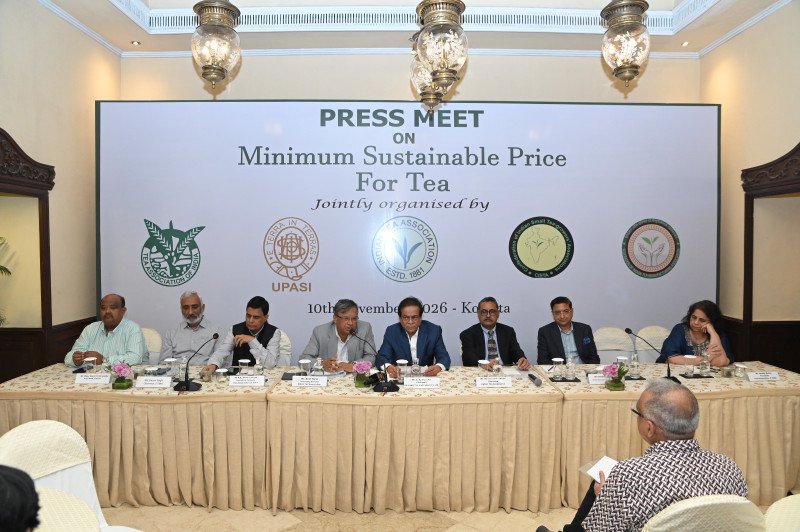
The press conference brought together senior representatives of the five industry associations, representing diverse segments of the tea value chain, includingorganised tea estates, small tea growers and bought-leaf factories. The discussions highlighted the need for a pricing framework that recognises the varying economic realities of the sector while ensuring the sustainability of tea production across regions.
Mr. C.K. Dhanuka, Chairman, Dhunseri Tea and Industries, said, “The tea industry is confronted with mounting cost pressures, while tea price realisationshave remained relatively stagnant. With further increases in wage costs anticipated pursuant to the implementation of the Code on Wages, the financial viability of tea producers is likely to face additional challenges. A Minimum Sustainable Price frameworkis therefore essential to bridge the widening gap between production costs and market realisations and to ensure the long-term sustainability of the industry. A Minimum Sustainable Price will help bring realisations in line with costs, so that the industrycan protect accommodate wage revisions, protect employment and the competitiveness of Indian tea.”
The recommendation for an MSP assumes particular significance given the structural challenges confronting the industry. Employment costs account for approximately60% of the total cost of tea production, making producers particularly vulnerable to wage increases. With the anticipated notification of floor wages by the Central and State Governments under the Code on Wages, tea producers are expected to face further increasesin operating costs.
To address these concerns, the Committee has recommended a composite index reflecting wage movements and the Consumer Price Index (CPI) for determining the benchmarkMSP. It has also proposed periodic reviews of the benchmark to ensure that the pricing framework remains aligned with changes in production costs and inflation.
Key Benefits of a Minimum Sustainable Price for the Tea Industry
The introduction of a Minimum Sustainable Price is expected to deliver wider benefits across the tea value chain; key expected benefits include:
- Enabling the industry to better accommodate future increases in wages and salaries arising from anticipated notifications under the Code on Wages. This will be a win-win situation for the tea estate workers and small growers.
- Improving the financial viability and sustainability of the tea industry, creating a stronger foundation for the sustained production of quality Indian tea.
- Supporting better and more stable returns for small tea growers and registered tea gardens, strengthening their ability to maintain operations and adhere to quality benchmarks.
- Encouraging improvements in the quality of green leaf and made tea, enhancing the global image of Indian tea and strengthening its export competitiveness.
Mr. Suneel Singh Sikand, Chairman, Indian Tea Association, said, “The recommendation for a Minimum Sustainable Price is an important policy intervention towards addressing the structural challenges confronting the Indian tea industry. Ensuring remunerative returns to producers is critical to sustaining operations, facilitatinginvestment in replantation and productivity enhancement and securing the industry's long-term sustainability.”