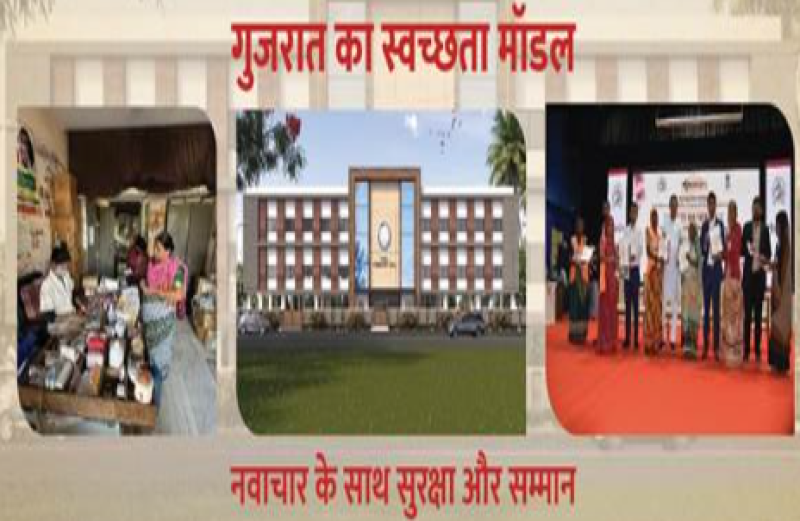
New Delhi, April 9, 2026: Under Swachh Bharat Mission–Urban 2.0, states are showing measurable progress in solid waste management, sanitation infrastructure and citizen participation, but Gujarat’s latest interventions stand out for combining technology with worker dignity and social inclusion.
Rajkot’s robotic sewer cleaning model
Rajkot has introduced an advanced robotic sewer-cleaning system worth ₹2.29 crore, marking a major shift away from hazardous manual scavenging practices.
The initiative supports a “zero human entry” vision, ensuring sanitation workers no longer need to physically enter sewers. Instead, safai mitras are being trained and deployed as robot operators, significantly improving:
- Worker safety
- Operational efficiency
- Social dignity
- Skill upgradation
This model represents a strong example of technology-enabled occupational transformation under urban sanitation reforms.
Community infrastructure for sanitation workers
In a parallel inclusion-focused step, Rajkot Municipal Corporation has built a modern community facility dedicated to sanitation workers and their families.
The building includes:
- Marriage and event hall
- Kitchen and dining facilities
- Parking
- Modern utility infrastructure
The facility is expected to benefit more than 5,000 sanitation worker families, creating a dedicated social and cultural space that reinforces dignity and recognition.
Bharuch’s women sanitation workers health drive
In Bharuch, the municipality organized a special health camp for 108 women safai mitras on International Women’s Day, covering:
- Health screening
- Medicine distribution
- Nutrition guidance
- Hygiene counselling
The initiative reflects a more gender-sensitive sanitation workforce welfare approach, extending SBM-U beyond infrastructure into public health and wellbeing.