

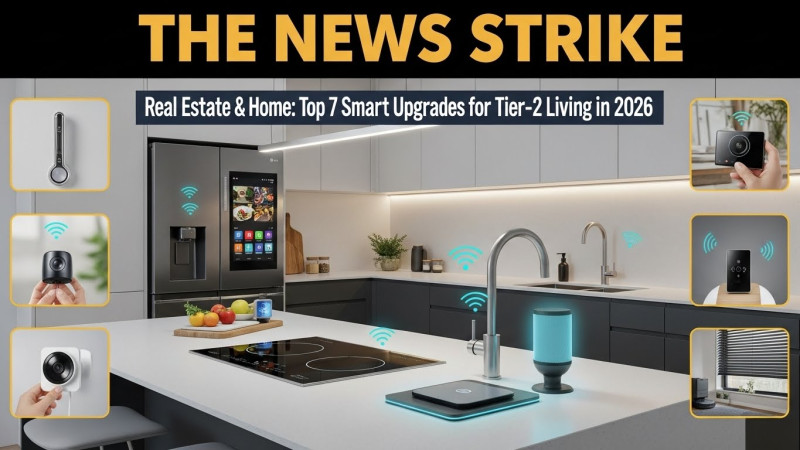
Pune, December 11, 2025: India’s real estate market is projected to reach $1.5 trillion by 2030, with Tier-2 cities witnessing rapid growth. Premium launches are expected to account for 40% of new projects, driven by NRI investments and domestic buyers seeking modern yet affordable living. From spiritual hotspots to tech-enabled homes, residents are embracing smart upgrades that enhance convenience, sustainability, and lifestyle quality.
Here are the top seven smart upgrades transforming Tier-2 living in 2026.
1. Modular Wall Systems: Renovation-Free Reconfigurations
Modular walls allow homeowners to reconfigure interiors without major renovations, adapting rooms for work-from-home setups, nurseries, or entertainment spaces. These lightweight, movable partitions bring flexibility to urban apartments, enabling families to optimize space dynamically and avoid expensive structural changes.
2. AI Energy Auditors: Leak Tutorials
AI-powered home energy auditors detect leaks, inefficiencies, and consumption patterns, providing actionable insights to optimize electricity, water, and gas usage. Some systems offer step-by-step tutorials for repairs, allowing residents to reduce utility bills while improving sustainability. Energy-conscious buyers increasingly consider these features as standard smart home essentials.
3. Community Garden Balconies: Urban Herb Hubs
Balconies and rooftop spaces are being transformed into community gardens, promoting wellness, green living, and social interaction. AI and app integrations help residents monitor growth, schedule watering, and track environmental impact, creating a sense of shared responsibility while adding beauty and utility to urban spaces.
4. Voice-Controlled Security Webs: Sound Alerts
Home security is evolving with voice-activated monitoring systems that control cameras, alarms, and smart locks. Alerts are customized based on user commands and environmental triggers, enhancing personal safety and peace of mind. In Tier-2 cities, these solutions are becoming accessible, reliable, and indispensable for modern homeowners.
5. Investment Heatmap Overlays: AR Growth Zones
Real estate buyers are using AR overlays on property maps to visualize potential growth zones, infrastructure developments, and rental yield opportunities. These heatmaps, updated in real-time, allow informed decisions, turning property hunting into data-driven investment planning rather than guesswork.
6. Biophilic Decor Hacks: Mood-Purifying Plants
Interior design is embracing biophilic principles, integrating natural elements like plants, water features, and natural light to improve mood, productivity, and well-being. AI-assisted recommendations help residents select the right plants for air purification, aesthetics, and space efficiency, creating homes that enhance both mental and physical health.
7. Rental Yield Forecasters: Co-Living ROI
With co-living and shared spaces on the rise, AI tools now forecast rental yields and ROI based on location, property type, and market trends. These insights empower homeowners and investors to optimize rental strategies, ensure profitability, and make informed decisions about shared accommodations.
Why Smart Upgrades Matter for Tier-2 Living:
Tier-2 cities are no longer secondary markets—they’re dynamic hubs for technology adoption, lifestyle enhancement, and sustainable living. Smart upgrades—from modular interiors to AI energy monitoring—allow residents to maximize comfort, convenience, and investment potential. Buyers are increasingly evaluating homes not just for size or location but for integrated technological capabilities and lifestyle benefits.
Key Takeaways for 2026 Homeowners:
Modular walls and biophilic design enhance space flexibility and wellness.
AI-driven energy auditing and security systems optimize efficiency and safety.
Community gardens and co-living yield forecasting foster social and financial benefits.
AR overlays and smart dashboards transform property decisions into data-informed choices.
For Tier-2 residents in 2026, smart home upgrades redefine modern living, combining technology, sustainability, and comfort. By embracing these seven innovations, homeowners can enjoy convenient, eco-friendly, and future-ready living spaces, reflecting the evolving priorities of India’s next-generation urbanites.
.jpeg)
