New Delhi, March 17, 2026:
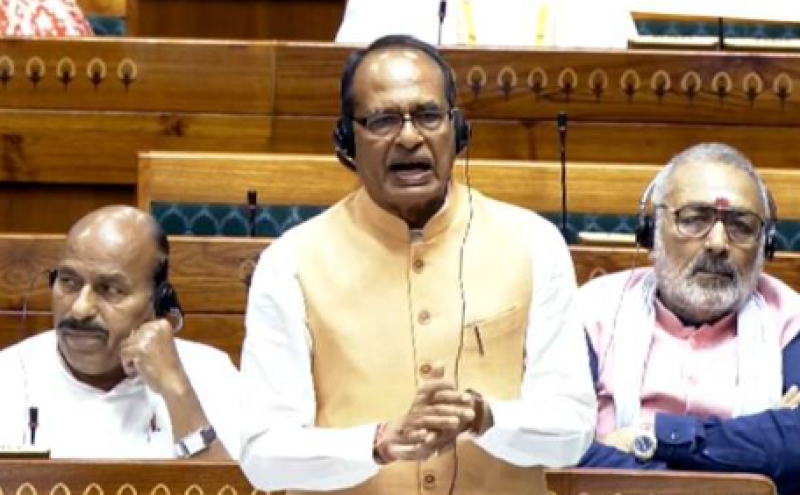
Union Minister for Agriculture & Farmers’ Welfare and Rural Development Shivraj Singh Chouhan on Tuesday said in the Lok Sabha that the government is committed to ensuring both higher income and greater security for farmers through a combination of policy reforms, crop diversification, and improved monitoring systems.
Responding to questions from Members of Parliament, Chouhan highlighted that the government, under Prime Minister Narendra Modi, is actively encouraging farmers to shift away from tobacco cultivation toward more profitable and sustainable cash crops. These include hybrid maize, chilli, sweet potato, cotton, potato, chia, feed beans, cowpea, ragi, red gram, sugarcane, soybean, sorghum, and groundnut, especially in regions traditionally dependent on tobacco farming.
Emphasizing the challenges faced by small and marginal farmers, the minister said that relying on a single crop is risky. To address this, the government has developed integrated farming models, which combine multiple agricultural and allied activities such as cereals, horticulture, livestock, fisheries, beekeeping, goat rearing, and agroforestry. Pilot demonstrations of these models are already underway in several states to ensure year-round and stable income for farmers.
Chouhan also underscored the government’s efforts to ensure remunerative prices for agricultural produce. Minimum Support Prices (MSP) have been increased across key crops including wheat, paddy, pulses, and oilseeds, with procurement at MSP reaching historic levels. He noted that for pulses such as tur, masoor, and urad, the government has assured full procurement from registered farmers, providing a significant boost to pulse growers.
Highlighting reforms in crop insurance, the minister said that delays in compensation under the Pradhan Mantri Fasal Bima Yojana have been addressed through major policy changes. Now, even individual crop losses are eligible for claims, and insurance payouts must be credited within 21 days of yield data being finalized. In case of delays, both insurance companies and state governments will be liable to pay 12% interest, ensuring timely relief for farmers.
Reaffirming the government’s commitment to transparency, Chouhan referenced the Prime Minister’s stance of zero tolerance towards corruption and highlighted the role of digital monitoring platforms in enabling direct action against irregularities in agricultural systems.