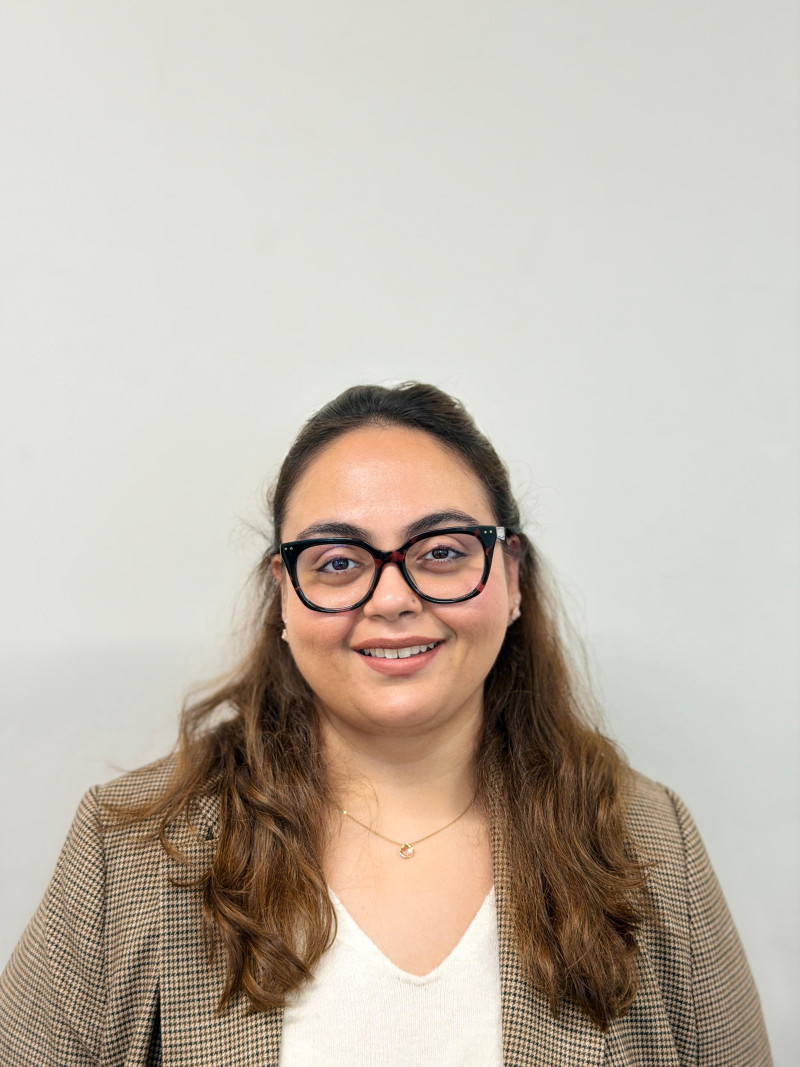
In conversation with Editor Ankur Sharma, The News Strike, Smriti Tandon, Co-Founder of Online Chikitsa Mitra and 120by80, said that improving healthcare access in rural and semi-urban India requires addressing trust gaps as much as infrastructure gaps. Drawing from on-ground experience, she noted that patients often rely on local pharmacies and familiar community networks rather than directly approaching hospitals or digital platforms. This insight led the company to strengthen existing healthcare touchpoints instead of creating parallel systems. Tandon also highlighted assisted telemedicine as a critical enabler of healthcare inclusion, combining technology with human support to help patients access qualified doctors without requiring digital literacy or confidence in navigating healthcare applications independently.
- Reimagining primary healthcare delivery through community-rooted models
One of the biggest lessons from working in rural India was that healthcare access is not only an infrastructure challenge it is also a trust challenge. Many healthcare models are designed assuming that patients will actively seek out hospitals, clinics, or digital platforms. In reality, healthcare journeys often begin much closer to home.
When we started, we initially focused on setting up standalone clinics. However, spending time in communities made us realise that the strongest healthcare networks already existed. Patients were already walking into local medical stores, seeking advice from familiar faces, and making healthcare decisions within trusted community structures.
That insight changed our approach. Rather than creating parallel systems, we decided to strengthen existing ones. Community-rooted healthcare models work because they acknowledge how people actually access care. Technology then becomes an enabler that improves the quality of care available through those trusted networks.
- Why assisted telemedicine is the real game-changer for rural and semi-urban India
I believe assisted telemedicine is important because it solves a problem that purely digital healthcare often overlooks. Access to a smartphone does not automatically translate into access to healthcare.
Many patients may own smartphones but still feel uncomfortable navigating healthcare applications independently. Others may prefer speaking to a person they trust rather than interacting directly with technology.
The assisted model bridges that gap. It combines the reach of technology with the reassurance of human support. Patients receive access to qualified doctors without needing to become technology experts themselves.
3. . The role of medical stores in bridging India’s last-mile healthcare gap
Medical stores occupy a unique position in India’s healthcare ecosystem. Long before digital health became a conversation, they were already acting as the first point of contact for many families. People visit medical stores because they are nearby, familiar, and accessible. In many communities, they are the most consistently available healthcare touchpoint.Rather than viewing medical stores only as dispensing centres, we saw an opportunity to connect them more closely to qualified medical advice. Through Online Chikitsa Mitra, medical stores can function as e-Clinics and digital health centres where patients gain access to doctors while continuing care locally.
The objective is not to replace their existing role but to expand what they can offer.
4. Women’s healthcare access in rural India - social barriers, real solutions
One of the most encouraging outcomes we have seen is that more than 56% of patients on our platform are women.
What this highlights is that healthcare access is often influenced by factors beyond medical availability. Travel, mobility, privacy, family responsibilities, and social comfort all play a role in determining whether women seek care.
When healthcare becomes available closer to home within a trusted environment, many of these barriers reduce naturally. Women do not necessarily need a different healthcare system. They need a healthcare system that is easier to access.
Sometimes the most meaningful solution is simply bringing quality care closer to where people already are.
5. What it takes to build trust in communities where healthcare has always felt out of reach
Trust cannot be downloaded through an application. It has to be earned through consistent experiences and outcomes.
One of the reasons we chose to work through existing community networks is because trust already existed there. The local medical store owner often knows multiple generations within a family. That relationship has been built over years.
Our role is not to replace that trust but to strengthen it with better healthcare access, qualified doctors, continuity of care, and follow-up support.
Ultimately, trust grows when people feel heard, receive timely care, and experience positive outcomes. Technology can facilitate that process, but it cannot replace it.
6. Lessons from the automobile industry that shaped her approach to health-tech leadership
Before entering healthcare, I spent time working within the automobile industry through our family’s Maruti Suzuki dealership business. While the industries appear very different, some lessons have proven remarkably transferable.
The biggest lesson was understanding the importance of distribution, service quality, and customer trust. A good product alone is rarely enough. The experience surrounding the product often determines whether people continue engaging with it.
Healthcare is no different. Building a platform is only one part of the challenge. Ensuring that people can access it, trust it, and benefit from it consistently is equally important.
That perspective has significantly influenced how we have approached healthcare delivery.
7. Building scalable healthcare models that work within existing community structures
Many healthcare innovations focus on creating entirely new systems. We chose a different path.
Scale becomes more sustainable when it builds on existing behaviour rather than attempting to change behaviour completely. Communities already have trusted healthcare touchpoints, established relationships, and familiar workflows.
By strengthening these structures rather than replacing them, adoption becomes more natural and long-term sustainability improves.
For us, scalability is not simply about expanding geographically. It is about creating a model that communities genuinely want to use because it fits naturally into their lives.
8. The intersection of digital health and human touch - why both are non-negotiable
Healthcare is deeply personal. People are often seeking care during moments of uncertainty, vulnerability, or concern.
Technology can make healthcare more efficient, more accessible, and more connected. However, empathy, reassurance, and trust remain fundamentally human experiences.
This is why we have always viewed technology as an enabler rather than a replacement. The most effective healthcare systems combine digital efficiency with human support.
Our Patient Relief Team is a good example of this philosophy. Technology facilitates consultations, but people ensure that patients feel supported before, during, and after those interactions.
9. Doctor-patient-community: redesigning the primary care triangle for Bharat
Traditionally, healthcare discussions focus on the relationship between doctors and patients. In many parts of India, however, there is a third stakeholder that plays a critical role: the community.
Community healthcare touchpoints influence when patients seek care, where they seek care, and whether they continue treatment. Ignoring this reality often creates gaps between healthcare systems and actual patient behaviour.
Our model acknowledges this third pillar. By connecting doctors, patients, and trusted community networks, we can create a more accessible and responsive primary healthcare ecosystem.
The future of healthcare in Bharat will not be built through technology alone. It will be built through stronger connections between all three.
10. What meaningful impact looks like in Indian health-tech beyond vanity metrics
Health-tech often celebrates metrics such as downloads, registrations, or application installs. While these indicators may show reach, they do not necessarily show impact.
For us, meaningful impact is measured differently. Are patients actually consulting qualified doctors? Are they completing treatment? Are women accessing care more easily? Are health outcomes improving? Are patients returning because they trust the experience?
Today, we have enabled over 1.5 lakh consultations, more than 56% of our patients are women, we have achieved an 88% patient relief rate, and nearly 50% of patients revisit the platform.
Those numbers tell a much more meaningful story than downloads ever could because they reflect real healthcare engagement and outcomes.